Humanoid Robots Information: Design Principles, Sensors, Actuators, AI Technologies and Use Cases
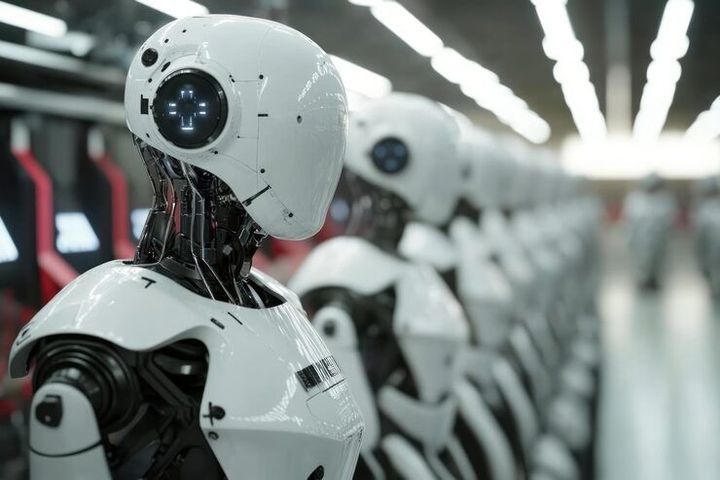
Humanoid robots are robotic machines designed with a body structure that resembles important aspects of the human form, commonly including a torso, two arms, two hands, a head or sensor platform, and two legs. The design is intended to help robots operate in spaces created for people, such as buildings, factories, warehouses, laboratories, and other environments.
The concept of humanoid robotics has roots in early mechanical automata, robotics research, and artificial intelligence. As computing, sensors, batteries, motors, materials, and control systems have developed, researchers have been able to create robots that can walk, balance, manipulate objects, recognize surroundings, and interact with people.
A humanoid robot combines several engineering disciplines. Mechanical structures provide movement, sensors collect information, actuators create physical motion, control systems coordinate the body, and AI technologies help interpret surroundings and determine appropriate actions.
The human-like structure is not required for every robotic task. However, it can be useful when a robot needs to navigate spaces, use tools, reach objects, or interact with equipment designed around human dimensions.
Main components of humanoid robots
A humanoid robot generally contains several interconnected systems:
- Mechanical frame for structural support
- Joints for controlled movement
- Actuators for producing motion
- Sensors for collecting environmental and internal information
- Computing hardware for processing data
- Batteries or another energy source
- Control software for coordinating movement
- AI models for perception, planning, learning, and interaction
These components must operate together. A powerful AI system cannot compensate for inadequate balance or mechanical limitations, while a capable mechanical system cannot perform complex autonomous tasks without appropriate sensing and control.
Importance
Humanoid robots have attracted attention because many human environments are already designed around human movement. Door handles, stairs, workbenches, shelves, tools, and storage areas commonly assume that a person can walk, reach, grasp, and manipulate objects.
A robot with a human-like structure may therefore be able to interact with existing environments without requiring every area to be redesigned specifically for the machine. This is one reason humanoid robots are being studied for manufacturing, logistics, research, inspection, education, and other applications.
Humanoid robotics also addresses technical challenges involving balance, manipulation, perception, and interaction. A two-legged robot must continuously manage its center of mass while walking, turning, stopping, or dealing with uneven surfaces.
Design principles
Humanoid robot design involves several competing requirements. The body must be strong enough to perform physical tasks while remaining sufficiently lightweight for efficient movement.
Balance is another central principle. The control system must coordinate the legs, torso, arms, and feet so that the robot can maintain stability during movement.
Human-like proportions can also influence the placement and range of joints. However, engineers do not necessarily reproduce human anatomy exactly because motors, gears, batteries, wiring, and electronic components have different physical requirements.
Sensors and perception
Sensors allow a humanoid robot to observe both its own condition and its surroundings. Common sensor categories include:
- Cameras for visual information
- Depth sensors for estimating distance
- LiDAR for environmental mapping and ranging
- Inertial measurement units for orientation and acceleration
- Force and torque sensors for detecting physical interaction
- Joint-position sensors for monitoring movement
- Tactile sensors for detecting contact and pressure
Sensor fusion combines information from several sources. For example, cameras can help identify an object while depth information can estimate its location and force sensors can help determine whether the robot has made physical contact.
Actuators and movement
Actuators convert electrical or other forms of energy into controlled mechanical movement. Electric motors are common in humanoid robots, often combined with gears, transmissions, encoders, and control electronics.
Different joints have different movement requirements. Hip and knee joints may require substantial torque for walking, while wrist and finger mechanisms generally need more controlled and precise movements.
| Component | Primary role | Example information or action |
|---|---|---|
| Camera | Visual perception | Identifies objects and surroundings |
| Depth sensor | Distance measurement | Estimates object or obstacle position |
| IMU | Motion and orientation | Detects acceleration and body orientation |
| Force sensor | Physical interaction | Measures applied force or torque |
| Encoder | Joint feedback | Tracks joint position |
| Actuator | Mechanical movement | Moves a joint or body segment |
| Computer | Data processing | Runs perception and control algorithms |
Recent Updates
From 2024 through 2026, humanoid robotics has increasingly focused on combining physical robotics with modern AI. Research and industry activity has moved beyond simple demonstrations toward questions about reliable perception, manipulation, mobility, training, safety, and practical deployment. The International Federation of Robotics has identified humanoids and AI-enabled robotics as significant areas of current development. IFR International Federation of Robotics
One notable direction is the use of generative AI and machine learning for robot instruction and task learning. Instead of relying entirely on manually programmed sequences, researchers are exploring systems that can interpret visual information, language, demonstrations, and task descriptions. IFR International Federation of Robotics
Another development is the improvement of core hardware. Lighter materials, smaller components, tactile sensing, force feedback, improved perception, and advances in mapping technologies are being investigated to make humanoid robots more capable in changing environments. IFR International Federation of Robotics
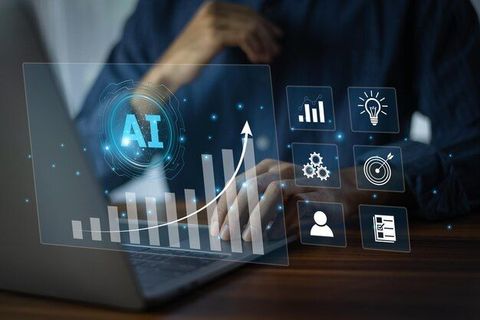
AI technologies in humanoid robotics
AI can contribute to several layers of a humanoid robot's operation.
Computer vision helps interpret images and identify objects, people, surfaces, and obstacles. Machine learning can support recognition, prediction, and adaptation based on collected data.
Natural language processing can allow a robot to interpret spoken or written instructions. Generative AI can also help translate higher-level instructions into sequences of robotic actions, although the physical execution still depends on the robot's control system and hardware.
Reinforcement learning is another research area. It can be used in simulated environments to train movement policies, walking behaviors, manipulation techniques, and other actions before transferring selected behaviors to physical hardware.
Current limitations
Humanoid robotics remains technically difficult. Walking on two legs requires continuous control, and manipulating unfamiliar objects requires accurate perception and coordination.
Other challenges include battery endurance, mechanical durability, heat management, computing requirements, training data, navigation in unpredictable environments, and physical safety.
The current direction is therefore not simply about making robots look human. Research is increasingly focused on whether a humanoid platform can perform specific tasks reliably under real-world conditions. Recent robotics analysis also notes that many current humanoid applications remain specialized or involve human supervision or teleoperation. IFR International Federation of Robotics
Laws or Policies
Humanoid robots can be affected by several categories of rules and technical standards depending on where and how they are deployed. Because requirements differ across jurisdictions and applications, there is no single worldwide regulatory framework covering every humanoid robot.
Relevant areas can include machine safety, electrical safety, electromagnetic compatibility, radio communications, data protection, workplace safety, product documentation, and human-robot interaction.
International robotics standards provide technical frameworks for certain types of robotic systems. Standards concerning industrial robots and collaborative robot applications can provide useful safety concepts, including risk assessment, protective measures, operating conditions, and system integration.
Humanoid robots may not fit neatly into one existing category because their physical form and intended uses vary considerably. A humanoid used for industrial manipulation can face different requirements from one designed for research, education, healthcare environments, or public interaction.
Risk assessment and human interaction
Risk assessment is an important part of physical robot deployment. Potential hazards can include unexpected movement, collision, crushing points, falling objects, electrical hazards, and unintended interaction with people.
Modern robotic development also places increasing attention on AI-related reliability. NIST's recent work on AI and robotics highlights challenges involving data management, sensing, control-system integration, trustworthy operation, and reliable performance in complex environments. NIST
Tools and Resources
Humanoid robotics relies on software platforms, simulation environments, development frameworks, datasets, and measurement tools.
Robot Operating System, commonly known as ROS, is widely used in robotics research and development. It provides software libraries and tools for communication between robotic components, sensor integration, visualization, simulation, and application development.
Simulation platforms can also be used to test robot behavior before physical experiments. A simulated humanoid can be evaluated for walking, manipulation, perception, and control under different environmental conditions.
Useful resources include:
- Robotics simulation environments for testing movement and interaction
- Robot middleware for connecting sensors, controllers, and applications
- Computer-vision libraries for image and object processing
- Motion-planning frameworks for calculating robot movements
- Digital-twin systems for representing physical robots in software
- Robotics datasets for training and evaluating AI models
- Technical standards for safety and performance assessment
Simulation is particularly important for humanoid robotics because physical testing can be time-consuming and complex. Virtual environments allow researchers to test many movement conditions and identify control problems before transferring selected behaviors to physical robots.
FAQs
What are humanoid robots?
Humanoid robots are machines designed with a human-like body structure, commonly including a torso, arms, legs, and a head or sensor platform. They combine mechanical systems, sensors, actuators, computing hardware, and software to perform physical and cognitive tasks.
What sensors are used in humanoid robots?
Humanoid robots can use cameras, depth sensors, LiDAR, inertial measurement units, force sensors, torque sensors, tactile sensors, and joint-position encoders. Sensor fusion allows information from different sensors to be combined for perception, balance, navigation, and manipulation.
How does AI work in humanoid robots?
AI can help humanoid robots recognize objects, interpret environments, understand instructions, plan actions, and learn movement patterns. Different AI methods can be used for computer vision, language processing, navigation, motion planning, and task learning.
What actuators are used in humanoid robots?
Electric motors are widely used as actuators in humanoid robots. Gear systems, transmissions, encoders, and control electronics can be combined with motors to produce controlled movement at the hips, knees, ankles, shoulders, elbows, wrists, and other joints.
Where are humanoid robots used?
Potential and developing use cases include manufacturing, warehouse activities, research laboratories, inspection, education, hazardous environments, logistics, and human-robot interaction. The suitability of a humanoid platform depends on its physical capabilities, software, operating environment, safety requirements, and the specific task.
Conclusion
Humanoid robots combine human-inspired mechanical structures with sensors, actuators, computing systems, control software, and AI technologies. Recent developments have focused on improving perception, movement, manipulation, learning, and interaction while addressing practical limitations such as energy use, reliability, and safety. Their potential applications span industrial, research, educational, logistics, and other environments, although capabilities vary substantially between robotic systems. Humanoid robotics therefore remains a multidisciplinary field where mechanical engineering, electronics, AI, and control technologies continue to develop together.