Metal Forming Machines Explained: Types, Processes, Applications and Industry Insights
Metal forming machines are industrial systems used to change the shape of metal through controlled force, pressure, bending, compression, stretching, rolling, or related processes. Instead of removing large amounts of material, metal forming generally reshapes a workpiece into a required geometry while retaining most of its original material.
Context
Metal forming has roots in traditional forging, rolling, bending, and pressing practices. Modern equipment has developed these principles into mechanically, hydraulically, electrically, and digitally controlled machines used across manufacturing industries.
Common examples include mechanical presses, hydraulic presses, press brakes, roll forming machines, stamping presses, forging equipment, tube bending machines, and specialized forming systems. The appropriate machine depends on factors such as material type, thickness, shape, production volume, required dimensions, and the forming process involved.
How metal forming works
The basic principle is relatively simple. A metal workpiece is positioned in or around tooling, and controlled force changes its shape. The force may be applied through a press, rollers, dies, punches, or other forming components.
Several processes can be used depending on the desired result:
- Bending changes the angle or curvature of a workpiece.
- Stamping creates shapes, openings, or surface features through dies and presses.
- Rolling passes material between rollers to reduce thickness or create a particular profile.
- Forging shapes metal through compressive forces, often using dies.
- Deep drawing forms flat sheet metal into deeper hollow shapes.
- Roll forming gradually bends a continuous strip through a sequence of rollers.
The material's mechanical properties influence how it responds to these processes. Factors such as strength, ductility, thickness, temperature, and grain structure can affect forming behavior.
Importance
Metal forming machines are important because many everyday products contain components created through shaping processes. Automotive components, appliances, construction products, electrical enclosures, industrial equipment, structural parts, containers, and many other manufactured products can involve some form of metal shaping.
For manufacturers, the forming process affects dimensional consistency, material utilization, tooling requirements, production flow, and product characteristics. Understanding the differences between machine types can therefore help explain why particular forming methods are used for particular components.
Major types of metal forming machines
Metal forming equipment can be grouped according to how force is generated and how the material is shaped.
| Machine type | Main forming method | Typical applications |
|---|---|---|
| Mechanical press | Mechanical force through a ram or slide | Stamping, punching and forming |
| Hydraulic press | Hydraulic pressure | Deep forming, compression and heavy forming |
| Press brake | Controlled bending force | Sheet and plate bending |
| Roll forming machine | Sequential roller bending | Continuous profiles and channels |
| Forging press | High compressive force | Engineered forged components |
| Tube bending machine | Controlled bending | Tubes, pipes and structural sections |
| Stamping press | Die-based forming | Sheet-metal components |
| Servo press | Programmable mechanical motion | Flexible forming and stamping |
Mechanical presses
Mechanical presses use mechanical drive systems to move a slide or ram through a controlled motion. They are commonly associated with stamping and repetitive forming operations.
Their configuration can vary considerably. Some systems are designed for high-speed repetitive work, while others are configured around larger workpieces or more complex dies.
Hydraulic presses
Hydraulic presses generate force through hydraulic systems. Their operating characteristics allow controlled force and movement across a forming cycle.
They can be used for operations involving deep forming, compression, straightening, and other applications where controlled pressure is important. Hydraulic systems are also used in specialized forming equipment for different material and component requirements.
Press brakes
Press brakes are primarily associated with sheet-metal bending. A sheet is positioned between tooling, and the machine applies force to create a specified bend.
Modern press brakes may incorporate CNC controls, automated tool management, angle measurement, and robotic material handling. These features can support repeatable production while reducing the amount of manual positioning required.
Roll forming machines
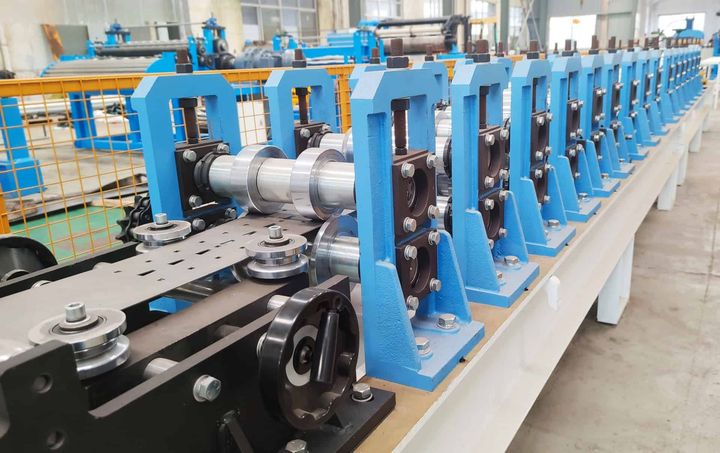
Roll forming machines gradually shape continuous metal strip through multiple roller stations. Each station introduces a small amount of bending until the required profile is achieved.
This approach is commonly associated with channels, rails, structural sections, frames, and other long profiles. The tooling sequence is designed around the intended cross-sectional shape.
Recent Updates
Metal forming technology has increasingly incorporated automation, servo drives, sensors, CNC controls, robotics, and digital production monitoring. Industry reporting from 2024 onward has highlighted developments involving servo presses, pressroom automation, robotic press-brake operation, and digital approaches to stamping.
Servo technology and programmable motion
Servo presses can control slide movement through programmable motion profiles rather than relying solely on a fixed mechanical cycle. This can provide greater flexibility when forming different components or working with demanding materials.
Recent industry activity has also shown continued interest in servo technology, automated feeding, and integration between presses and material-handling systems. These developments are part of a broader movement toward more connected production equipment.
Robotics and automation
Robots and collaborative robots are increasingly being integrated with press brakes and other forming equipment. Applications can include loading sheets, positioning workpieces, transferring components, and removing completed parts.
Automation is also being combined with vision systems, automatic tooling, sensors, and programmable controls. A 2024 example documented robotic tending of a press brake, including automated material handling and interaction with the machine control interface.
New material requirements
Metal forming equipment must also adapt to changing material characteristics. Higher-strength steels, aluminum alloys, and other engineered materials can have different forming behavior from conventional grades.
This has increased attention to tooling design, press control, material flow, forming limits, and process monitoring. Industry programs and technical discussions in recent years have placed continued emphasis on new alloys, servo technology, press controls, and automation.
Laws or Policies
Metal forming machines are subject to workplace safety requirements, machinery regulations, and technical standards. The exact legal requirements depend on the country or jurisdiction where equipment is designed, installed, or operated.
A major area of regulation concerns machine guarding. Presses and forming machines can contain moving components that create crushing, shearing, pinch-point, and other mechanical hazards. Regulations therefore commonly address guards, emergency controls, safe operating procedures, maintenance practices, and protection around hazardous points.
International standards also provide technical frameworks for machine safety. ISO 16092-1:2017 addresses general safety requirements for presses used to work cold metal and certain other sheet materials. Separate parts address mechanical, hydraulic, and pneumatic presses. ISO is currently developing a revised edition of the general press-safety standard.
In jurisdictions using OSHA requirements, for example, machine guarding rules address hazards at the point of operation and require appropriate protection for applicable machinery. OSHA's mechanical power-press requirements also contain specific provisions for point-of-operation guarding.
Manufacturers and operators therefore need to consider applicable national legislation, technical standards, risk assessments, machine documentation, and workplace procedures rather than relying on one standard for every forming application.
Tools and Resources
Several technical resources can help readers understand metal forming machines and their applications.
Forming calculators
Engineering calculators can assist with calculations related to bending force, material thickness, bend allowance, tonnage, springback, and other forming parameters. The equations used depend on the material, machine configuration, tooling, and forming method.
These calculators are useful for understanding the variables involved, but actual production settings require consideration of the specific machine, tooling, material, and process conditions.
Technical standards
Standards databases from organizations such as ISO and national standards bodies provide information about machine safety and technical requirements. ISO 16092 is particularly relevant to press safety, with separate documents addressing different press technologies.
CAD and simulation software
Computer-aided design software can be used to develop components and tooling before physical production. Forming simulation tools can further help analyze material flow, deformation, springback, and potential forming problems.
Simulation does not eliminate the need for physical validation. Actual results can depend on material characteristics, tooling condition, lubrication, machine settings, and other production variables.
Machine documentation
Technical manuals, tooling drawings, maintenance records, machine specifications, and safety documentation are important resources for understanding individual equipment. Information such as maximum forming force, stroke, working area, material range, control system, and tooling compatibility can help describe a machine's intended operating range.
FAQs
What are metal forming machines used for?
Metal forming machines reshape metal through processes such as bending, stamping, rolling, drawing, forging, and pressing. They are used to produce components for transportation, construction, appliances, electrical equipment, industrial machinery, and other manufacturing applications.
What are the main types of metal forming machines?
Common types include mechanical presses, hydraulic presses, press brakes, roll forming machines, forging presses, stamping presses, tube bending machines, and servo presses. Each type uses a different combination of force, tooling, motion, and material handling.
What is the difference between mechanical and hydraulic metal forming machines?
Mechanical presses use mechanical drive systems to move the forming tool, while hydraulic presses generate force through hydraulic pressure. Their operating characteristics differ in areas such as motion control, force application, stroke behavior, and suitable forming applications.
How does a press brake work in metal forming?
A press brake bends sheet or plate metal by applying controlled force through an upper and lower tool arrangement. CNC systems can control factors such as bend position, sequence, and machine movement.
How is automation changing metal forming machines?
Automation is increasingly connecting forming machines with robots, sensors, programmable controls, automated material handling, and production-monitoring systems. These technologies can reduce manual handling and create more connected production workflows.
Conclusion
Metal forming machines use controlled force and tooling to reshape metal into components, profiles, and structures required for manufacturing. Mechanical presses, hydraulic presses, press brakes, roll forming machines, forging equipment, and servo presses each have distinct operating characteristics and applications. Recent developments have increased the use of automation, programmable motion, robotics, sensors, and digital production systems in forming operations. Safety regulations and technical standards remain important because forming equipment can present significant mechanical hazards during operation and maintenance.