Fabric Printing Machine Guide: Types, Printing Technologies, Production and Uses
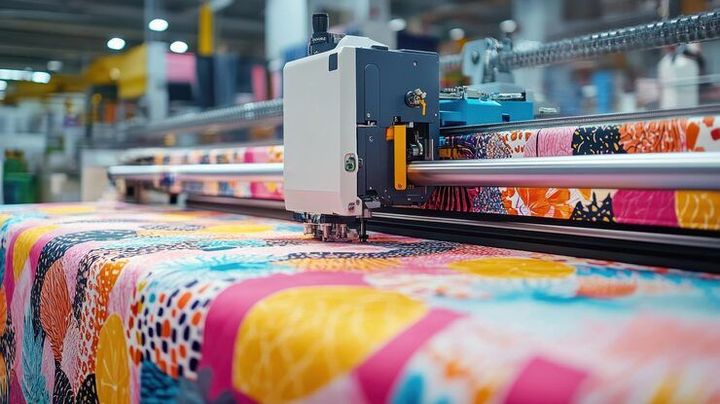
A fabric printing machine is industrial equipment used to apply colors, patterns, graphics, or decorative designs onto textile materials. Fabric printing has existed for centuries through methods such as hand blocks, engraved rollers, screens, and other mechanical techniques. Modern machinery has expanded these methods through automated printing, computer-controlled systems, and digital inkjet technologies.
Context
Textile printing is different from fabric dyeing because printing normally places color in selected areas to create a specific design, while dyeing generally colors a larger portion or the entire textile. The choice of printing technology depends on fabric composition, design complexity, production quantity, required color characteristics, and subsequent finishing processes.
Modern fabric printing machines can range from flat-screen and rotary-screen systems to digital textile printers. Digital equipment can transfer artwork from a computer directly onto fabric through controlled ink application, reducing the need for physical screens for each design.
The production process can also involve fabric preparation, printing, drying or fixation, washing when required, and finishing. Each stage can affect the appearance, durability, and handling characteristics of the printed material.
How fabric printing developed
Traditional textile printing relied heavily on physical patterns and mechanical processes. Screen printing became widely used because it allowed designs to be reproduced across fabric, while rotary-screen systems later enabled continuous production.
Digital textile printing introduced another approach by using print heads to place small droplets of ink onto fabric. Research and industry developments have continued to improve print-head technology, ink formulations, color management, and automated production systems.
Importance
Fabric printing is important across clothing, home textiles, interior materials, decorative fabrics, technical textiles, and other textile applications. Printed patterns can communicate visual information, create decorative surfaces, and support different product designs.
For manufacturers, the printing method needs to correspond with the fabric and intended use. Cotton, polyester, silk, blends, and synthetic materials can require different ink systems and preparation procedures.
Factors that affect printing
Several factors influence the outcome of a textile printing process:
- Fabric fiber composition
- Fabric weight and surface structure
- Design size and complexity
- Required color range
- Print resolution
- Production quantity
- Ink or colorant chemistry
- Fixation requirements
- Washing and finishing procedures
The interaction between the fabric surface, ink, printing equipment, and finishing process is particularly important in digital textile printing. Research into digital textile technologies notes that fabric structure and material characteristics can influence the final printed appearance.
Fabric printing machine types
Different machines use different methods to transfer designs onto textiles.
| Machine type | Main printing method | Typical characteristics |
|---|---|---|
| Flat-screen printer | Screen-based | Suitable for repeated textile designs and selected production requirements |
| Rotary-screen printer | Cylindrical screens | Designed for continuous fabric printing |
| Digital textile printer | Inkjet | Transfers computer-generated designs directly to fabric |
| Sublimation printer | Dye-sublimation ink | Commonly associated with polyester-based textiles |
| Pigment ink printer | Pigment-based ink | Can be used with various textile substrates when compatible |
| Transfer printing system | Printed transfer medium | Design is transferred from another material onto fabric |
No single machine type is appropriate for every textile application. The fabric, design, production requirements, and ink system all influence the selection.
Recent Updates
Fabric printing technology has continued to develop through digital inkjet systems, pigment inks, automation, improved print heads, and more integrated production workflows. Recent research and industry discussions have placed particular attention on reducing water use, improving resource efficiency, and developing ink systems with different environmental characteristics.
Growth of digital textile printing
Digital textile printing has become an important area of development because designs can be transferred electronically without creating a separate physical screen for every new pattern. This can simplify design changes and make the technology suitable for applications requiring varied designs.
Research published in recent years has examined digital printing in relation to customization, resource use, production flexibility, and integration with digital manufacturing systems.
Pigment ink developments
Pigment-based digital printing has received considerable attention because pigment systems can potentially reduce some wet-processing requirements. Recent research has also examined water-based pigment inks and bio-based pigments for digital textile printing on materials such as cotton and polyester.
However, environmental performance should not be assumed from the word "pigment" alone. Ink formulation, pretreatment, curing, equipment settings, fabric composition, and subsequent processing all influence the overall production footprint.
Automation and Printing 4.0
Modern textile printing is also becoming more connected with digital production systems. Computerized color management, automated fabric handling, print monitoring, workflow software, and data collection can connect different stages of production.
Artificial intelligence is also being investigated for textile printing tasks such as color prediction, pattern processing, and print-quality analysis. These applications remain an evolving area of industrial research.
Environmental measurement
Environmental performance is receiving greater attention in textile printing. An international standard concerning communication of environmental aspects of printed textiles is currently under development through ISO, covering both analogue and digital printing processes.
This development reflects a broader shift toward documenting environmental information rather than describing a printing method as environmentally preferable without considering the complete production process.
Laws or Policies
Fabric printing is influenced by environmental, workplace, chemical, wastewater, product-safety, and textile-labeling requirements. The specific rules vary by jurisdiction and can depend on the type of textile, chemicals used, production scale, wastewater arrangements, and final application.
Environmental requirements
Wet textile printing can generate wastewater containing colorants, auxiliaries, cleaning chemicals, and other substances. Where wastewater is discharged, environmental authorities may establish requirements for treatment, monitoring, and discharge quality.
For example, textile environmental requirements in some jurisdictions include controls for wastewater, energy management, and production techniques. European environmental criteria for textile production have included requirements relating to wastewater treatment and energy management.
Some jurisdictions have also introduced or revised textile wastewater standards in recent years. China, for example, issued GB 4287-2026 for textile-industry water pollutants, replacing earlier textile wastewater standards and establishing requirements for pollutant discharge, monitoring, and related environmental controls.
These examples illustrate why textile printing facilities need to identify the environmental requirements applicable to their particular location rather than relying on a single international rule.
Chemical and product requirements
Textile printing can involve dyes, pigments, binders, solvents, pretreatment chemicals, and cleaning substances. Applicable chemical restrictions may affect which substances can be used and how textile materials are processed.
Businesses may also need documentation covering chemical composition, worker protection, wastewater management, waste handling, and textile-product requirements. The precise obligations depend on local regulations and the intended market.
Tools and Resources
Several technical resources can help people understand fabric printing and evaluate production processes.
Fabric and ink compatibility charts
Manufacturers and technical organizations commonly provide information about which ink systems are intended for particular textile fibers. Such information can help explain differences between reactive, acid, disperse, sublimation, and pigment-based systems.
Compatibility should be assessed together with pretreatment, fixation, washing, and finishing requirements rather than looking only at the fiber name.
Color-management tools
Color-management software and spectrophotometers can be used to measure and control color during textile production. These tools help compare digital artwork, printed samples, and production results.
Production planning templates
A basic textile printing production sheet can record:
- Fabric type and composition
- Fabric width
- Design dimensions
- Printing method
- Ink type
- Pretreatment requirements
- Printing settings
- Drying or fixation method
- Washing requirements
- Quality-control observations
Recording these factors creates a consistent reference for production analysis.
Technical and research resources
Industry associations, textile research institutes, standards organizations, equipment documentation, academic publications, and environmental agencies can provide information about textile printing technologies.
Recent research into digital textile printing has examined resource consumption, pigment systems, automation, ink chemistry, and production integration.
FAQs
What is a fabric printing machine?
A fabric printing machine is equipment designed to apply patterns, images, or colors to textile materials. Depending on the machine, the process may use screens, rollers, inkjet print heads, transfer media, or other mechanisms.
What are the main types of fabric printing machines?
Common types include flat-screen printers, rotary-screen printers, digital textile printers, sublimation systems, pigment printing systems, and transfer printing equipment. Each type has different operating principles and material requirements.
How does a digital fabric printing machine work?
A digital fabric printing machine receives a design from a digital file and uses controlled inkjet print heads to place ink onto the textile surface. Depending on the ink system, the fabric may require pretreatment and subsequent drying, curing, or washing.
Which printing technology is used for polyester fabric?
Several technologies can be used with polyester, including dye-sublimation and certain disperse or pigment-based systems. The appropriate method depends on the specific fabric construction, ink chemistry, printing equipment, and required finishing characteristics.
What is the difference between screen printing and digital fabric printing?
Screen printing transfers color through prepared screens, while digital printing uses computer-controlled print heads to deposit ink directly onto the fabric. Digital printing can simplify design changes, while screen-based processes remain relevant for particular production requirements.
Conclusion
Fabric printing machines use different mechanical and digital technologies to place designs and colors onto textile materials. Flat-screen, rotary-screen, digital, sublimation, transfer, and pigment-based systems each involve different equipment, inks, preparation methods, and finishing processes. Recent developments have focused on digital workflows, pigment inks, automation, resource management, and improved environmental measurement. The final printing process depends on the fabric, design, ink system, production requirements, and applicable environmental and product regulations.