Plastic Shredder Insights: Shredding Technologies, Material Types and Industrial Applications
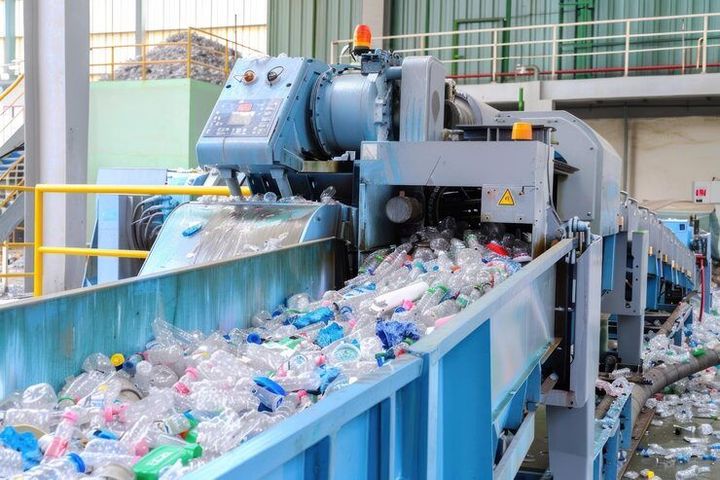
A plastic shredder is industrial equipment used to reduce plastic items, production scrap, and discarded plastic products into smaller pieces. Shredding is generally one stage within a broader material-processing sequence and can prepare plastic for sorting, washing, granulation, extrusion, or other downstream processes.
Context
A plastic shredder is industrial equipment used to reduce plastic items, production scrap, and discarded plastic products into smaller pieces. Shredding is generally one stage within a broader material-processing sequence and can prepare plastic for sorting, washing, granulation, extrusion, or other downstream processes.
The need for plastic shredding developed alongside the growing use of plastics in packaging, manufacturing, construction, automotive components, consumer products, and many other applications. Plastic products vary considerably in thickness, hardness, shape, and polymer composition, so different shredding arrangements have been developed for different material streams.
A typical plastic shredder uses rotating cutting elements, a fixed cutting surface, a motor and drive system, a feeding arrangement, and a discharge area. Some systems use one rotating shaft, while others use two or more shafts depending on the material and required output.
Shredding should also be distinguished from grinding. A shredder generally reduces larger or irregular plastic items into relatively coarse pieces, while a granulator or grinder can further reduce those pieces into smaller particles. In an industrial recycling line, these machines may operate as separate stages.
How plastic shredding works
Plastic material enters the feed area and moves toward the cutting mechanism. Rotating cutters apply shear and tearing forces that break the material into smaller pieces.
Some machines use a screen or sizing mechanism to control the material leaving the cutting chamber. The resulting particle size depends on factors such as cutter configuration, screen dimensions, rotor speed, material characteristics, and machine design.
The general sequence can include:
- Feeding: Plastic enters the shredding chamber through a controlled inlet.
- Size reduction: Rotating cutters interact with stationary cutting elements.
- Screening: A sizing screen may retain larger pieces for additional reduction.
- Discharge: Processed material leaves the machine for another stage.
- Further processing: Shredded material may be washed, separated, dried, granulated, or converted into another form.
Importance
Plastic shredders play a role in industrial material handling because plastic waste is rarely uniform. A manufacturing facility may generate rigid components, rejected parts, film, pipes, containers, sheets, or production offcuts, each with different physical properties.
Reducing large plastic pieces can make subsequent handling and processing more manageable. Shredding can also help prepare material for sorting and size reduction systems used in recycling operations.
The usefulness of a shredder depends on the material being processed and the intended downstream process. A machine configured for thin film may not be appropriate for thick, rigid components, while a system designed for heavy plastic items may have unnecessary capacity for lightweight film.
Common plastic materials
Plastic is a broad category rather than a single material. Common polymers encountered in industrial processing include polyethylene (PE), polypropylene (PP), polyethylene terephthalate (PET), polystyrene (PS), polyvinyl chloride (PVC), and acrylonitrile butadiene styrene (ABS).
| Plastic type | Common examples | Typical shredding consideration |
|---|---|---|
| PE | Containers, pipes, films | Flexible or rigid forms require different approaches |
| PP | Containers, automotive parts, molded components | Can occur as both thin and rigid products |
| PET | Bottles, packaging materials | Often processed through sorting and further size reduction |
| PVC | Pipes, profiles, sheets | Requires attention to formulation and contamination |
| PS | Packaging and molded items | Low-density forms can behave differently during feeding |
| ABS | Housings, industrial components | Rigid material may require robust cutting elements |
The table provides general material categories rather than universal machine specifications. Actual processing behavior can change according to additives, fillers, moisture, contamination, product geometry, and polymer formulation.
Industrial applications
Plastic shredders are used in several industrial environments. Manufacturing facilities may process production scrap so that larger plastic components can enter subsequent material-processing stages.
Recycling operations can use shredders as an initial size-reduction stage for collected plastic. Construction and infrastructure activities can also generate plastic pipes, profiles, sheets, and other items that may require size reduction before further processing.
Other applications can include:
- Packaging-material processing
- Plastic product manufacturing
- Automotive component processing
- Agricultural plastic handling
- Pipe and profile processing
- Electronic-product material recovery
- Post-industrial scrap preparation
- Recycling-line feed preparation
The actual application depends on the material stream, contamination level, required particle size, and downstream process.
Recent Updates
From 2024 through 2026, plastic-processing discussions have increasingly focused on material quality, chemical composition, traceability, and the relationship between mechanical recycling and other recycling technologies.
The OECD reported in 2026 that mechanical recycling remains the most commonly used recycling approach, while chemical recycling remains deployed on a much smaller scale and has its own sustainability challenges. This distinction is relevant to shredding because mechanical recycling commonly requires sorting and physical size reduction before later processing stages.
Another area receiving attention is the quality of recycled plastic. An OECD report published in 2026 examined chemical-content validation and noted challenges arising from additives, contaminants, incomplete chemical information, and the heterogeneous nature of plastic waste. These factors increase the importance of material identification and separation before or alongside shredding.
Greater attention to material preparation
Modern recycling systems increasingly treat shredding as one part of a connected process rather than an isolated operation. Sorting, washing, drying, size reduction, separation, and quality control can all influence the properties of the resulting recycled material.
Flexible and multilayer plastics remain challenging because their structures and contamination levels can complicate sorting and recycling. An OECD publication on recycled plastics noted that flexible packaging and multilayer materials can create additional difficulties for material recovery and quality control.
International plastic-policy developments
International negotiations concerning a global agreement on plastic pollution have also continued. Negotiations in 2025 ended without agreement on a final treaty text, while a resumed organizational session took place in 2026 and elected a new committee chair; substantive negotiations did not take place during that session.
These developments do not establish a universal requirement for plastic shredders. They demonstrate, however, that plastic production, waste management, recycling, and environmental controls remain active areas of international policy development.
Laws or Policies
Rules affecting plastic shredding depend on the country, region, type of plastic, source of the material, and intended destination of the processed waste. A general industrial article should therefore distinguish between equipment requirements and waste-management requirements.
Plastic shredding equipment may be subject to workplace safety, electrical, machinery, emissions, noise, and environmental requirements depending on where it operates. Waste containing hazardous substances can also fall under additional controls.
International movement of plastic waste is another important policy area. The Basel Convention's Plastic Waste Amendments introduced specific categories and controls for transboundary movements of plastic waste. The amendments distinguish between hazardous plastic waste, plastic waste requiring special consideration, and certain plastic waste destined for environmentally sound recycling under defined conditions.
The Basel Convention also uses a Prior Informed Consent procedure for specified categories of waste moved across national boundaries. The precise obligations depend on the classification of the material and the countries involved.
Rules can also affect the quality and destination of recycled plastic. For example, European Union legislation concerning recycled plastic materials includes requirements related to recycling processes and defines pre-processing activities that include sorting, shredding, washing, mixing, and other treatments.
Because waste and recycling regulations vary considerably, specific compliance decisions should be based on the current rules issued by the relevant national or regional authority.
Tools and Resources
Several technical resources can help readers understand plastic shredding and recycling processes without relying only on equipment descriptions.
Material identification resources
Polymer identification references can help distinguish materials such as PE, PP, PET, PVC, PS, and ABS. Understanding polymer type is important because different plastics can behave differently during cutting, feeding, washing, and subsequent processing.
Equipment specification sheets
Technical specification documents can provide information about:
- Rotor configuration
- Cutter dimensions
- Motor rating
- Feed opening
- Screen arrangement
- Shaft configuration
- Intended material range
- Nominal throughput
- Safety features
Such specifications should be interpreted alongside the actual material characteristics rather than viewed as universal performance figures.
Recycling guidelines
The Basel Convention provides technical guidelines and other resources concerning environmentally sound management of plastic waste. Its technical-guideline program covers identification, handling, processing, and management considerations for plastic waste.
The OECD also publishes research concerning plastic waste, recycling, recycled content, chemical considerations, and international plastic-waste trade. Its 2025 monitoring work examines developments in the international trade of plastic waste and scrap.
Process-flow documentation
A simple process-flow diagram or spreadsheet can be used to document the sequence from incoming material through sorting, shredding, washing, separation, drying, granulation, and subsequent processing. Recording material type and contamination at each stage can help explain how different inputs affect the resulting material.
FAQs
What is a plastic shredder used for?
A plastic shredder reduces large or irregular plastic materials into smaller pieces. These pieces can then enter additional processes such as sorting, washing, granulation, or extrusion.
What are the main plastic shredding technologies?
Common arrangements include single-shaft and twin-shaft shredders, along with other multi-rotor configurations. The appropriate arrangement depends on factors such as material geometry, hardness, flexibility, contamination, desired particle size, and downstream processing requirements.
Which plastic materials can a plastic shredder process?
Plastic shredders can be designed for materials such as PE, PP, PET, PVC, PS, and ABS, although a particular machine is not necessarily suitable for every form of these polymers. Product thickness, additives, reinforcement, moisture, and contamination can significantly affect processing behavior.
What is the difference between a plastic shredder and a plastic granulator?
A plastic shredder generally performs coarse size reduction of larger plastic items. A granulator typically produces smaller and more uniform particles. Recycling lines may use both machines at different stages.
Why is plastic sorting important before shredding?
Sorting helps separate different polymer types, colors, product categories, and unwanted materials. Better separation can reduce cross-contamination and help maintain more consistent material characteristics during subsequent recycling stages.
Conclusion
Plastic shredders are size-reduction machines used across manufacturing, recycling, and other industrial material-processing applications. Their design can vary according to polymer type, material shape, contamination, required particle size, and the processes that follow shredding. Recent developments have placed greater attention on recycled-material quality, chemical composition, traceability, and environmentally sound waste management. Plastic-waste regulations also vary by jurisdiction, with international controls applying to certain cross-border movements of plastic waste.