Centrifugal Pump Details: Pump Types, Working Methods, Application and Maintenance
A centrifugal pump is a mechanical device used to move liquids through pipes, tanks, processing systems, and other fluid-handling arrangements. It uses rotating motion to transfer energy to a liquid and convert that energy into pressure and flow. Centrifugal pumps are widely used because their operating principle can be adapted to many different fluid-handling requirements.
Context
A centrifugal pump is a mechanical device used to move liquids through pipes, tanks, processing systems, and other fluid-handling arrangements. It uses rotating motion to transfer energy to a liquid and convert that energy into pressure and flow. Centrifugal pumps are widely used because their operating principle can be adapted to many different fluid-handling requirements.
The basic design consists of components such as an impeller, casing, shaft, bearings, seals, and a driver. The impeller rotates inside the casing and creates a pressure difference that moves liquid from the suction side toward the discharge side.
Centrifugal pumps developed from early mechanical pumping concepts and became increasingly important as industrial water systems, manufacturing facilities, irrigation networks, and processing plants expanded. Modern designs vary considerably according to liquid characteristics, flow requirements, pressure requirements, temperature, materials, and installation conditions.
Basic pump terminology
Several terms help explain how a centrifugal pump operates. Flow rate describes how much liquid passes through the pump over a given period, while head represents the energy required to move the liquid through the system. Pressure is related to the force exerted by the liquid, while efficiency describes how effectively input energy is converted into useful hydraulic output.
The relationship between these factors is important because a pump is selected as part of a complete piping system rather than as an isolated machine.
Importance
Centrifugal pumps play an important role in moving water and other liquids in industrial, agricultural, commercial, and infrastructure applications. They can be found in water circulation, irrigation, cooling systems, chemical processing, drainage, manufacturing, and many other fluid-handling processes.
A pump that does not match the required flow, head, liquid characteristics, or piping arrangement may operate inefficiently or experience mechanical problems. Understanding pump types and working methods therefore helps explain why selection, installation, and routine maintenance are closely connected.
How a centrifugal pump works
The working process begins when liquid enters the pump through the suction connection. The rotating impeller accelerates the liquid outward from its center toward the outer edge.
As the liquid leaves the impeller, the casing helps convert part of its velocity into pressure. The pressurized liquid then moves through the discharge connection and into the downstream piping system.
This process can be summarized as:
- Liquid enters through the suction side.
- The impeller rotates and transfers energy to the liquid.
- Centrifugal action moves the liquid outward through the impeller.
- The casing converts part of the liquid velocity into pressure.
- The liquid exits through the discharge connection.
The actual performance depends on the impeller design, rotational speed, liquid properties, piping arrangement, and system resistance.
Main centrifugal pump types
Centrifugal pumps can be classified in several ways. One common approach is based on the number of impeller stages.
A single-stage centrifugal pump has one impeller and is commonly used where the required pressure or head can be achieved with a single pumping stage. A multistage centrifugal pump has several impellers arranged in sequence, allowing greater pressure or head to be developed.
Another classification considers the direction in which liquid moves through the impeller. Radial-flow pumps move liquid primarily outward from the impeller, while mixed-flow and axial-flow designs have different flow patterns suited to particular applications.
| Pump type | General characteristic | Typical application area |
|---|---|---|
| Single-stage | One impeller | Water circulation and general liquid transfer |
| Multistage | Multiple impellers | Higher-head pumping systems |
| End-suction | Suction enters through the end of the casing | General industrial and water applications |
| Split-case | Casing separates for access to internal components | Larger pumping installations |
| Self-priming | Designed to handle certain priming conditions | Drainage and liquid transfer |
| Vertical centrifugal | Pump arrangement is oriented vertically | Space-limited or specialized installations |
Important pump components
The impeller is the rotating component that transfers energy to the liquid. The casing surrounds the impeller and directs liquid toward the discharge connection.
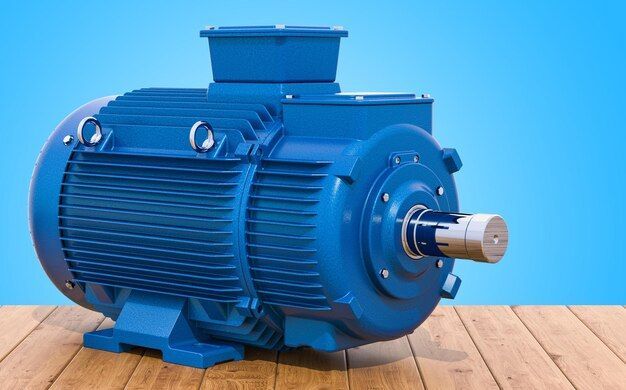
The shaft transfers rotational motion from the driver to the impeller. Bearings support the rotating assembly, while seals help limit liquid leakage around the shaft. The driver may be an electric motor or another suitable power source.
Recent Updates
Recent developments in centrifugal pump technology have focused on energy management, monitoring, materials, automation, and system-level efficiency. Variable-speed drives are increasingly considered where changing flow requirements make continuous operation at one fixed speed unsuitable.
Digital monitoring can also provide information about vibration, temperature, pressure, flow, motor condition, and other operating parameters. Such information can help identify changes in pump behavior before they develop into more significant mechanical issues.
Efficiency and variable-speed operation
A centrifugal pump does not necessarily operate at the same efficiency across its entire operating range. Its performance is normally represented through a pump curve showing relationships among flow, head, efficiency, and sometimes power requirements.
Variable-speed operation can adjust pump output to changing system requirements. However, the control method needs to be compatible with the pump, motor, piping arrangement, and overall system.
Energy efficiency has also received increased regulatory attention in some markets. For example, the U.S. Department of Energy published a final rule concerning circulator pumps, with compliance requirements scheduled for a later implementation period.
Digital monitoring
Sensors and connected monitoring systems are being used in some installations to collect operating information. Data can include discharge pressure, suction pressure, vibration, bearing temperature, motor current, and flow.
These technologies do not replace basic mechanical inspection. Instead, they provide another way to observe operating conditions and identify changes that may require investigation.
Laws or Policies
Centrifugal pumps can be affected by machinery-safety rules, electrical requirements, environmental regulations, pressure-system requirements, water regulations, and product standards. The applicable requirements depend on the pump's application, location, liquid, installation, and intended operating environment.
International standards provide technical frameworks for pump design and testing. ISO 9906, for example, specifies hydraulic performance acceptance tests for rotodynamic pumps, including centrifugal pumps. It provides different acceptance grades for testing hydraulic performance.
National standards can also define requirements for particular pump categories. In India, the Bureau of Indian Standards lists standards covering horizontal centrifugal pumps, agricultural pumping systems, centrifugal regenerative pumps, and other pump categories. BIS records show IS 6595 Part 2:2024 for horizontal centrifugal pumps for clear, cold water used for general purposes outside agricultural and rural water supply.
BIS also lists requirements concerning machinery and electrical equipment, including pumps, under its certification framework and related technical regulations. The applicable requirements can change through amendments and notifications, so the current standard and regulatory documents should be checked for a specific installation.
Tools and Resources
Several technical resources can help users understand centrifugal pump performance, selection, and maintenance.
Pump curves and system calculations
Pump curves show the relationship between flow and head at particular operating conditions. System calculations consider pipe length, pipe diameter, elevation changes, fittings, valves, and other sources of resistance.
Engineers can use these calculations to determine the operating point where the pump curve intersects the system curve. This helps explain why a pump's rated flow alone does not describe its actual performance in every installation.
Monitoring instruments
Common measurement tools include pressure gauges, flow meters, vibration meters, temperature sensors, and electrical measurement equipment. Comparing readings over time can help identify changes in operating behavior.
Standards databases
The ISO standards database provides information about international pump standards and testing methods. National standards organizations can provide equivalent information for locally applicable requirements. BIS's "Know Your Standard" platform allows users to search standards using an Indian Standard number or product keyword and access related documents and information.
Maintenance records
A maintenance record can include:
- Inspection date
- Pump operating hours
- Vibration observations
- Pressure and flow readings
- Bearing condition
- Seal condition
- Lubrication activity
- Alignment checks
- Replaced components
- Unusual noise or temperature observations
Consistent records can make it easier to compare present operating conditions with earlier measurements.
FAQs
What is a centrifugal pump and how does it work?
A centrifugal pump moves liquid by using a rotating impeller to transfer energy to the liquid. The casing then helps convert part of the liquid's velocity into pressure before the liquid enters the discharge piping.
What are the main centrifugal pump types?
Common centrifugal pump types include single-stage, multistage, end-suction, split-case, self-priming, and vertical designs. The appropriate configuration depends on factors such as flow, head, liquid characteristics, installation arrangement, and operating conditions.
What are centrifugal pumps used for?
Centrifugal pumps are used for applications such as water circulation, irrigation, cooling, drainage, industrial liquid transfer, process systems, and other fluid-handling operations. The pump design and materials need to correspond with the liquid and operating conditions.
How can centrifugal pump maintenance be performed?
Routine maintenance can include checking for abnormal vibration or noise, inspecting seals and bearings, monitoring pressure and flow, checking alignment, examining lubrication requirements, and inspecting relevant connections. The manufacturer's maintenance instructions and applicable safety procedures should also be followed.
What affects centrifugal pump performance?
Performance can be affected by impeller design, rotational speed, flow resistance, pipe arrangement, liquid properties, suction conditions, wear, and operating point. Pump curves and system calculations help describe how these factors interact.
Conclusion
Centrifugal pumps use rotating impellers to transfer energy to liquids and are available in configurations suited to different flow, head, and installation requirements. Their performance depends on the relationship between the pump, liquid, piping system, and operating conditions. Recent developments have increased the use of variable-speed control, digital monitoring, and more detailed performance analysis. Standards and regulations also provide frameworks for pump testing, safety, and technical requirements across different applications.