Vacuum Forming Machines Details: Heating, vacuum pressure and Product Applications
Vacuum forming machines are used to shape thermoplastic sheets into three-dimensional products by combining controlled heating, vacuum pressure, and moulds. The process belongs to the wider group of thermoforming methods, where a plastic sheet is heated until it becomes flexible and then shaped over or around a mould. After cooling, the formed sheet retains the required shape.
Context
The basic principle is relatively simple. A flat thermoplastic sheet is positioned inside the machine and heated to an appropriate forming temperature. A vacuum system then removes air between the softened sheet and the mould, allowing atmospheric pressure to push the material against the mould surface. After the material cools sufficiently, the formed component is removed and may undergo trimming or other secondary operations.
Vacuum forming developed as manufacturers needed practical methods for producing shaped plastic components without relying on more complex moulding processes for every application. The technique can accommodate different sheet materials, mould designs, part sizes, and production arrangements.
Main stages of vacuum forming
A typical vacuum forming cycle consists of several connected stages:
- Sheet loading places the thermoplastic sheet into a clamping frame.
- Heating raises the sheet temperature until it reaches a suitable forming condition.
- Positioning moves the heated sheet toward the mould.
- Vacuum application removes air from the space between the sheet and mould.
- Forming allows atmospheric pressure to push the softened sheet against the mould.
- Cooling allows the material to regain sufficient rigidity.
- Demoulding separates the formed component from the mould.
- Trimming removes excess material around the finished shape.
The exact sequence varies according to the machine configuration, material, mould design, and product requirements.
Common machine configurations
Vacuum forming equipment ranges from manually operated systems used for prototypes and small production runs to automated systems with controlled heating, vacuum cycles, cooling, material handling, and trimming. Some machines process individual sheets, while larger systems can use continuous material feeds.
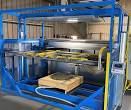
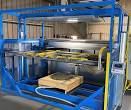
The main components generally include a heating unit, clamping frame, mould table, vacuum pump or reservoir, control system, cooling arrangement, and structural frame. More automated equipment may also incorporate sensors, programmable controls, material loading systems, and automated part removal.
Importance
Vacuum forming machines are relevant across packaging, transportation, construction, electronics, medical equipment, consumer products, and industrial manufacturing. The process allows flat thermoplastic sheets to become trays, covers, housings, panels, containers, liners, protective inserts, and other shaped components.
One important characteristic is the ability to create relatively large or shallow components from sheet material. Tooling can also be configured for different shapes, making the process applicable to both prototype development and repeated production.
Why heating matters
Heating is one of the most important parts of vacuum forming. Thermoplastic sheets need to reach a temperature range in which they can stretch and conform to the mould without becoming excessively degraded or difficult to control.
Uneven heating can produce uneven wall thickness, surface defects, wrinkles, or incomplete mould conformity. For this reason, machines may use multiple heating zones so that different areas of the sheet can receive controlled amounts of thermal energy.
The heating method depends on machine design and material requirements. Electric radiant heaters, ceramic heating elements, infrared systems, and other controlled heating arrangements can be used in thermoforming equipment.
Vacuum pressure and forming
Vacuum pressure is created by removing air from the space between the heated sheet and mould. The pressure difference causes the softened sheet to move toward the mould surface.
The vacuum level, speed of air removal, mould ventilation, sheet temperature, and material thickness all influence forming behavior. Small vents or channels in the mould can help trapped air escape from detailed areas.
| Process factor | Main function | Possible effect on forming |
|---|---|---|
| Heating temperature | Softens the thermoplastic sheet | Influences flexibility and stretching |
| Heating uniformity | Distributes heat across the sheet | Influences wall-thickness consistency |
| Vacuum level | Removes air beneath the sheet | Influences mould conformity |
| Vacuum speed | Controls how quickly forming begins | Influences material movement |
| Mould temperature | Controls heat transfer during forming | Influences cooling and dimensional stability |
| Cooling | Reduces material temperature | Allows the part to retain its shape |
| Sheet thickness | Determines available material | Influences strength and stretching behavior |
These variables interact with each other. Adjusting one parameter can change the behavior of the entire forming cycle.
Materials used in vacuum forming
Vacuum forming is commonly associated with thermoplastics because these materials can soften when heated and become rigid again after cooling. Materials used in different applications can include ABS, HIPS, PETG, PVC, polypropylene, polyethylene, acrylic, and other thermoplastic grades.
Material selection depends on factors such as temperature behavior, flexibility, impact characteristics, appearance, chemical resistance, thickness, and intended application. Different grades of the same polymer can also behave differently during heating and forming.
Recent Updates
Developments in vacuum forming and wider thermoforming during 2024–2026 have increasingly focused on automation, digital controls, material efficiency, recycled-content materials, and process monitoring. Industry discussions and technical research have also examined digital twins, automated quality systems, and more precise control of heating and forming conditions.
Digital process control
Modern thermoforming equipment can integrate programmable controls, sensors, automated heating zones, servo-driven movements, and digital monitoring. These systems can record process parameters and help operators maintain consistent production conditions.
Research published in 2025 has also explored digital-twin methods for predicting material deformation during vacuum-assisted thermoforming. Such research examines how temperature, material behavior, friction, and forming conditions interact during production.
Another 2025 research project investigated vision-based quality control for vacuum thermoforming. The work explored using visual information to identify forming defects and adjust parameters such as heating power, heating time, and vacuum time. This remains a developing research area rather than a universal feature of vacuum forming machines.
Recycled and alternative materials
Material development is another area receiving attention. Research published in 2025 investigated vacuum-formed composites containing biomass-derived fillers in a polyolefin material. The study examined how these fillers affected mechanical and moisture-related properties.
Thermoforming applications are also increasingly examining recycled thermoplastics and materials with alternative formulations. These materials can behave differently from conventional sheets, so heating, drying, forming temperature, and cooling conditions may require adjustment.
Energy management
Heating represents a significant part of the thermal process, so manufacturers and researchers continue to examine heating-zone control, thermal monitoring, insulation, and process optimization. Current equipment discussions also place attention on digital monitoring and energy-aware machine operation.
Laws or Policies
Vacuum forming machines can be subject to machinery safety, electrical safety, workplace protection, environmental, and product-specific requirements. The exact rules depend on where the equipment is manufactured, installed, and operated and on the type of products being produced.
Because no specific country is defined for this article, regulatory requirements cannot be assigned to one national framework. International standards and the rules of the applicable jurisdiction should be considered separately.
Machinery safety
Machinery regulations commonly address hazards associated with moving components, hot surfaces, electrical systems, pressure or vacuum systems, emergency stopping, guarding, and access to hazardous areas. A machine's intended use and design can affect which requirements apply.
The European Union's Machinery Regulation is an example of a current regulatory framework covering machinery health and safety requirements. Regulation (EU) 2023/1230 is scheduled to apply from January 2027, with certain provisions applying earlier. The regulation establishes requirements concerning the design and construction of machinery and related products.
International standardization work also covers plastics and rubber processing machinery. ISO/TC 270 develops standards addressing machinery safety and related technical matters in plastics and rubber processing.
These references do not mean that one standard or regulation applies to every vacuum forming machine. The applicable requirements depend on the jurisdiction, machine configuration, intended use, and product category.
Workplace considerations
Operators can encounter hot heating elements, heated plastic sheets, moving frames, vacuum equipment, sharp trimmed edges, and electrical components. Machine documentation normally addresses operating procedures, guarding, maintenance, emergency controls, and other safety considerations.
Product-specific requirements can also apply when vacuum-formed components are used for food packaging, medical applications, transportation equipment, or other regulated products. Such requirements relate to the finished product and material as well as the forming equipment.
Tools and Resources
Several technical resources can help readers understand vacuum forming machines and evaluate forming processes.
Material data sheets
Thermoplastic material data sheets provide information about processing temperatures, mechanical properties, thickness ranges, and other characteristics. These documents are useful when determining whether a particular sheet grade is appropriate for a forming process.
Vacuum and temperature measurement
Vacuum gauges can indicate pressure conditions within the forming system, while thermocouples, infrared sensors, or pyrometers can help monitor material or mould temperatures. Measurement equipment can be used during process development and troubleshooting.
CAD and mould-design software
Computer-aided design software can be used to develop mould geometry and estimate the dimensions of formed components. Digital simulation tools can also examine material stretching, thickness distribution, cooling, and deformation before physical trials.
Process records
A simple process sheet can record:
- Sheet material and thickness
- Heating-zone settings
- Heating duration
- Vacuum level and cycle duration
- Mould temperature
- Cooling duration
- Part dimensions
- Observed forming defects
Keeping these variables together can make it easier to identify relationships between process settings and finished-part characteristics.
FAQs
What are vacuum forming machines used for?
Vacuum forming machines heat thermoplastic sheets and shape them against moulds using vacuum pressure. Typical applications include packaging trays, protective inserts, equipment covers, panels, housings, containers, and various shaped plastic components.
How does heating work in a vacuum forming machine?
A vacuum forming machine uses controlled heating elements to raise the temperature of a thermoplastic sheet until it becomes sufficiently flexible for forming. Multiple heating zones may be used to improve temperature distribution across the sheet.
How does vacuum pressure shape plastic sheets?
After heating, the sheet is positioned over a mould and air is removed from the space between the sheet and mould. The resulting pressure difference draws the softened sheet against the mould surface, creating the required shape.
What materials can vacuum forming machines process?
Common thermoplastic materials include ABS, HIPS, PETG, PVC, polypropylene, polyethylene, and acrylic. The suitable material depends on its thermal behavior, thickness, mechanical properties, surface requirements, and intended application.
What products can be made with vacuum forming?
Vacuum forming can produce packaging trays, containers, protective inserts, equipment housings, interior panels, covers, liners, display components, and other shaped thermoplastic products. Product geometry and material thickness influence which designs are practical.
Conclusion
Vacuum forming machines use controlled heating, vacuum pressure, moulds, and cooling to transform thermoplastic sheets into shaped components. Heating uniformity, vacuum conditions, material characteristics, mould design, and cooling all influence the forming process. Recent developments have placed greater attention on automation, digital monitoring, recycled materials, energy management, and process simulation. Applicable machinery, workplace, environmental, and product regulations depend on the jurisdiction and intended application.