Warehouse Forklifts Guide: Types, Lifting Capacities, Features and Warehouse Applications
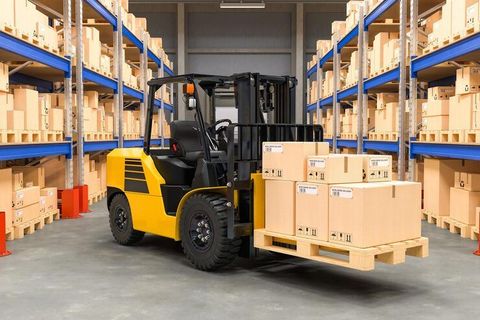
Warehouse forklifts are material-handling vehicles designed to lift, move, position, and stack loads within storage and distribution environments. They are commonly used for handling pallets, containers, cartons, packaged materials, and other loads that are difficult to move manually.
Context
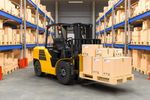
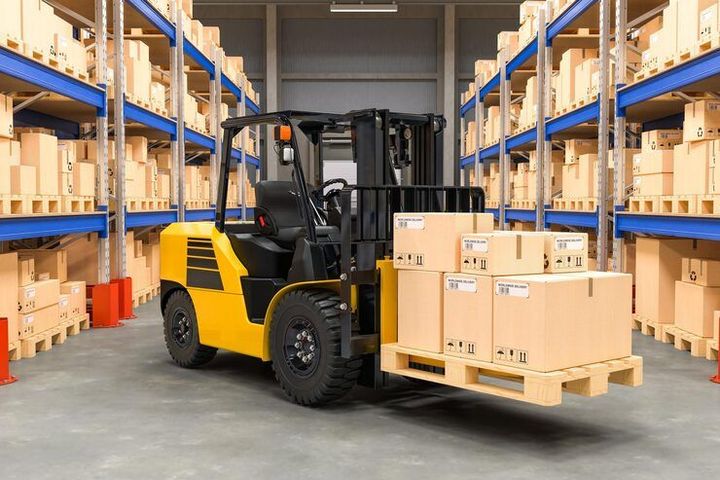
The basic forklift design combines a powered vehicle, lifting mechanism, mast, forks, and operator controls. The forks move vertically along the mast, allowing a load to be raised or lowered while the vehicle moves it between storage locations, staging areas, loading zones, and production areas.
Different warehouse layouts and load requirements have resulted in several forklift types. Counterbalance forklifts, reach trucks, pallet trucks, order pickers, and narrow-aisle forklifts are designed for different operating conditions.
Forklift lifting capacity is not determined only by the physical strength of the machine. Load weight, load dimensions, load center, lift height, attachments, mast configuration, and operating conditions can affect the rated capacity shown on the equipment's capacity plate.
Main forklift components
A warehouse forklift typically includes several important components:
Mast: The vertical structure that guides the lifting mechanism.
Forks: Horizontal arms positioned beneath a pallet or load.
Carriage: The structure that supports the forks and moves along the mast.
Counterweight: A mass used on applicable forklift designs to balance the load.
Power system: May use an electric battery, internal-combustion engine, or another approved power source.
Operator compartment: Contains controls, steering equipment, pedals, and protective structures.
The arrangement of these components varies according to forklift type and intended application.
Importance
Warehouse forklifts play an important role in facilities where materials must be moved repeatedly over relatively short distances. They can reduce the amount of manual handling required for heavy or elevated loads and help organize the movement of palletized materials.
Forklift selection is closely connected with warehouse layout. A machine designed for a spacious storage area may not be appropriate for narrow aisles or high storage positions. Similarly, a forklift intended for light indoor handling may not be suitable for heavier loads or outdoor operating conditions.
Matching forklift capacity with warehouse requirements
Lifting capacity refers to the maximum load a forklift is rated to handle under specified conditions. It should not be treated as a single number that applies to every possible lifting situation.
As the load center moves farther from the mast, the leverage acting on the forklift changes. Greater lift heights and certain attachments can also affect the permitted capacity.
A simplified overview of commonly encountered capacity ranges is shown below. Actual ratings vary by model, configuration, lift height, attachment, and manufacturer specifications.
| Forklift type | Common application | Approximate capacity range |
|---|---|---|
| Electric counterbalance | Indoor pallet handling | 1,000–8,000 kg |
| Reach truck | High-rack warehouse storage | 1,000–2,500 kg |
| Pallet truck | Floor-level pallet movement | 1,000–3,000 kg |
| Order picker | Individual item picking | 500–2,000 kg |
| Narrow-aisle forklift | Restricted warehouse aisles | 1,000–2,500 kg |
| Internal-combustion forklift | Indoor or outdoor material handling | 1,500–10,000+ kg |
These figures are broad examples rather than operating limits. The capacity plate and manufacturer documentation for the particular configuration provide the applicable information.
Warehouse challenges addressed by forklifts
Forklifts can be relevant to several common material-handling challenges:
Moving palletized loads between different warehouse areas.
Placing materials into elevated storage positions.
Retrieving pallets from storage racks.
Handling loads around loading and unloading zones.
Working within aisles where manual movement would be difficult.
Supporting repetitive material-transfer activities.
Safe operation also depends on warehouse design, traffic management, floor conditions, visibility, load stability, operator training, and equipment condition.
Recent Updates
Warehouse forklift technology has increasingly focused on electrification, energy management, operator-assistance features, fleet monitoring, and automation. These developments are connected with changes in warehouse operations, including higher levels of inventory movement and greater use of automated material-handling systems.
Electric forklifts have become more prominent in indoor environments. Advances in battery technology, charging systems, and energy monitoring have expanded the range of applications in which electric equipment can be considered.
Automation and operator assistance
Automated guided vehicles and autonomous mobile robots are increasingly being used alongside conventional warehouse equipment. Some facilities use automated systems for repetitive transport while retaining manually operated forklifts for tasks requiring flexible positioning or elevated pallet handling.
Operator-assistance technology is another developing area. Depending on the equipment, features may include speed management, proximity detection, load monitoring, stability-related information, cameras, and visibility aids.
These technologies are designed to provide additional information or control functions. They do not remove the need for appropriate operator training, workplace procedures, equipment inspections, or awareness of surrounding traffic.
Connected forklift systems
Modern warehouse equipment may also include telematics systems that collect information such as operating hours, battery condition, impact events, location, or equipment utilization.
Data from connected equipment can be used for maintenance planning, fleet analysis, and identifying operational patterns. The specific information available depends on the forklift and the associated monitoring system.
Laws or Policies
Forklift operation is generally affected by workplace safety requirements, equipment standards, operator-training rules, inspection procedures, and workplace risk-management practices. The exact requirements depend on the jurisdiction and the type of workplace.
In the United States, for example, the Occupational Safety and Health Administration has requirements covering powered industrial trucks, including operator training, equipment inspection, operating practices, and workplace conditions. OSHA's requirements are contained in its powered industrial truck regulations and related guidance. (osha.gov)
Internationally, standards such as ISO 3691 address safety requirements and verification for industrial trucks. Such standards can cover areas including stability, braking, controls, visibility, and other design or operational considerations.
Regulatory requirements may also address training documentation, inspection records, load handling, pedestrian interaction, charging areas, and maintenance procedures. Organizations operating forklifts should follow the requirements applicable to their jurisdiction and workplace.
Capacity and equipment identification
A forklift's rated capacity is normally identified through a capacity plate or equivalent equipment information. The information can vary according to the mast, attachments, load center, and other configuration factors.
Operators should not assume that a forklift can handle a load simply because the load falls below a general capacity number. The applicable capacity information must correspond with the actual equipment configuration and lifting conditions.
Tools and Resources
Several resources can help readers understand forklift operation, capacity, and warehouse planning.
Capacity information
The manufacturer's specification sheet, operator manual, and capacity plate are important references for understanding a particular forklift's rated capabilities. These documents can contain information about load centers, lift heights, attachments, and operating limitations.
Warehouse layout tools
Warehouse planning software and layout tools can be used to evaluate aisle widths, rack locations, travel paths, storage positions, and equipment movement. A layout assessment can help identify whether a selected forklift can physically maneuver through the intended operating area.
Load calculation references
Load dimensions and weight information can be recorded in warehouse planning systems or spreadsheets. Useful fields may include:
Load weight
Load dimensions
Load center
Storage height
Rack position
Fork length
Attachment type
Required travel path
Such records help connect the physical characteristics of stored materials with equipment requirements.
Training and safety resources
Workplace safety authorities, equipment manufacturers, industry associations, and recognized standards organizations provide educational materials covering powered industrial trucks and material handling. These resources can explain inspection procedures, operator responsibilities, workplace hazards, and equipment requirements.
FAQs
What are the main types of warehouse forklifts?
Common warehouse forklift types include counterbalance forklifts, reach trucks, pallet trucks, order pickers, and narrow-aisle forklifts. Each type has different dimensions, lifting characteristics, maneuverability, and intended applications.
How is warehouse forklift lifting capacity determined?
Warehouse forklift lifting capacity depends on factors such as load weight, load center, lift height, mast configuration, attachments, and the specific forklift model. The rated capacity shown on the equipment's capacity plate should be used rather than relying on a general capacity range.
What is the difference between an electric forklift and an internal-combustion forklift?
Electric forklifts use batteries as their primary power source, while internal-combustion forklifts use an engine powered by an applicable fuel. Electric models are commonly associated with indoor applications, while internal-combustion equipment can be configured for a wider range of environments.
What is a reach truck used for in a warehouse?
A reach truck is designed for operations involving storage racks and relatively narrow aisles. Its configuration allows the load-handling mechanism to extend toward storage positions, making it suitable for certain high-rack warehouse layouts.
What factors should be considered when selecting a warehouse forklift?
Important factors include load weight and dimensions, load center, required lift height, aisle width, floor conditions, operating environment, power source, attachment requirements, travel distance, and applicable workplace rules.
Conclusion
Warehouse forklifts are material-handling vehicles designed for moving, lifting, positioning, and stacking loads in storage and distribution environments. Different forklift types address different combinations of lifting capacity, aisle width, storage height, load characteristics, and operating conditions. Capacity ratings depend on the specific equipment configuration and should be interpreted using the applicable capacity information. Recent developments include greater use of electric power, connected equipment, operator-assistance technology, and automated material-handling systems.