Fashion Guide for Women Mixing Indian and Western Styles Without Clashing
Indian and Western fashion represent different clothing traditions, silhouettes, fabrics, patterns, and styling approaches. Indian clothing often includes garments such as kurtas, sarees, salwar suits, lehengas, dupattas, and traditional textiles, while Western fashion commonly includes shirts, trousers, skirts, dresses, jackets, denim, and tailored separates.
Context
Mixing these styles creates a hybrid approach in which elements from both traditions appear within the same outfit. The result does not need to look complicated. A simple combination, such as a kurta with straight-leg trousers or a Western shirt with an Indian skirt, can create a balanced appearance.
This approach has developed through changing lifestyles, workplace environments, social occasions, travel, media, and the growing exchange of fashion ideas across cultures. Women may combine traditional and contemporary clothing to create outfits that suit different settings while retaining elements of cultural dress.
Understanding the balance
Combining Indian and Western styles works around a few basic principles: silhouette, proportion, colour, fabric, pattern, and accessories. When too many contrasting elements are introduced at once, the outfit can appear visually busy.
A practical approach is to select one main style and use the other as an accent. For example, an Indian garment can remain the central piece while Western footwear or a structured jacket provides a contemporary element.
Common combinations
Some combinations naturally create a connection between the two styles:
Kurta with trousers or straight-leg pants
Saree with a structured Western-style blouse
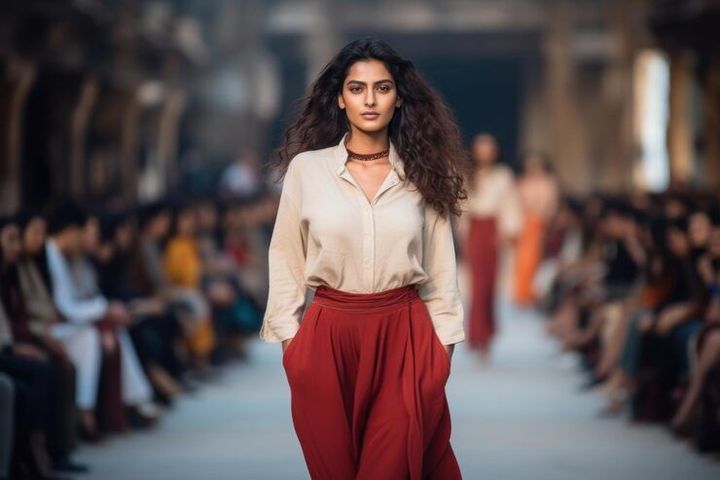
Indian skirt with a fitted shirt
Kurti with denim
Traditional printed top with tailored trousers
Saree with a blazer
Indian jewellery with a simple Western dress
The suitability of each combination depends on the occasion, proportions, colours, fabric weight, and personal comfort.
Importance
Mixing Indian and Western styles matters because clothing increasingly needs to work across different environments. A woman may move between professional settings, social gatherings, cultural occasions, travel, and everyday activities within the same week.
Hybrid styling can also provide flexibility when a complete traditional or complete Western outfit does not suit the setting. Instead of replacing one style with another, the two can be combined thoughtfully.
Avoiding visual imbalance
The main challenge is usually not the combination itself but the number of competing elements. A heavily embroidered garment, elaborate jewellery, patterned footwear, and a highly detailed bag may all attract attention at the same time.
A more balanced outfit can be created by controlling one or more of these elements:
Silhouette: Pair a loose garment with a more structured piece.
Colour: Use one dominant colour family and one or two supporting shades.
Pattern: Combine a detailed print with simpler clothing.
Texture: Balance textured fabrics with smoother materials.
Accessories: Let jewellery or another accessory provide the cultural accent when the clothing is simple.
Choosing proportions
Proportion can change how an outfit appears. A long Indian kurta may work differently with wide trousers than with narrow trousers, while a cropped Western jacket can create a different visual effect when worn with a long skirt or saree.
| Indian element | Western pairing | Styling consideration |
|---|---|---|
| Long kurta | Straight trousers | Creates a streamlined silhouette |
| Indian skirt | Simple shirt | Keeps the skirt visually prominent |
| Saree | Structured jacket | Adds a tailored layer |
| Kurti | Denim | Creates a casual combination |
| Dupatta | Simple dress | Introduces a traditional accent |
| Printed Indian top | Tailored pants | Balances pattern with structure |
Recent Updates
Fashion from 2024 through 2026 has continued to show greater interest in combining traditional clothing elements with contemporary silhouettes. Designers, stylists, and everyday wearers have increasingly used layering, relaxed tailoring, coordinated separates, and traditional textiles in modern outfit structures.
The movement is not limited to one specific clothing combination. Instead, several styling directions have become noticeable, including traditional garments paired with denim, Indian prints used in contemporary silhouettes, sarees styled with jackets, and traditional accessories used with simpler outfits.
Relaxed tailoring
Tailored trousers, oversized shirts, structured jackets, and relaxed blazers can provide a modern framework for Indian garments. These pieces can be particularly useful when the goal is to create an outfit that feels contemporary without removing traditional details.
For example, a printed kurta can be paired with tailored trousers rather than another highly decorated lower garment. Similarly, a saree can be worn with a structured jacket when the occasion allows for layering.
Contemporary traditional wear
Traditional garments are also being interpreted through changes in proportion and construction. Longer shirts, asymmetrical hems, simplified embroidery, relaxed kurtas, and separates can make traditional references easier to incorporate into everyday wardrobes.
The distinction between Indian and Western clothing has therefore become less rigid in many fashion contexts. However, cultural context remains important, particularly when clothing is worn for ceremonies or events with established dress traditions.
Minimal styling
Another noticeable direction is simpler styling. Instead of combining several culturally distinct pieces, an outfit may use one Indian garment with otherwise understated clothing and accessories.
This approach allows the fabric, print, embroidery, or silhouette of the main garment to remain visually clear.
Laws or Policies
Fashion styling itself is generally not governed by a single set of rules. However, clothing can intersect with regulations and policies concerning product labeling, textile composition, consumer protection, intellectual property, cultural heritage, workplace dress requirements, and event-specific rules.
For garments containing natural or synthetic fibres, labeling requirements may apply depending on the jurisdiction where the garment is manufactured or distributed. Textile labels may identify fibre composition, care instructions, country of manufacture, or other required information.
Intellectual property rules can also affect the reproduction of textile prints, logos, artwork, embroidery designs, and distinctive patterns. A traditional motif may have cultural significance, while a contemporary print created by a designer may be protected by applicable intellectual property rules.
Workplaces, educational institutions, religious venues, and event organizers may have their own clothing requirements. These can relate to safety, modesty, uniforms, protective clothing, or the nature of an event. Such requirements are separate from general fashion trends.
For personal styling, the practical principle is to distinguish between fashion inspiration and the unauthorized reproduction of protected designs, branding, or artwork.
Tools and Resources
Several tools can help with planning Indian and Western outfit combinations without requiring extensive fashion knowledge.
Digital wardrobe planners
Wardrobe-planning applications can organize clothing items by category, colour, season, or occasion. A user can record pieces such as kurtas, trousers, sarees, shirts, jackets, skirts, footwear, and accessories to identify combinations already available.
Colour tools
Digital colour wheels and palette generators can help identify complementary, analogous, or monochromatic colour combinations. These tools can be useful when an Indian garment contains several colours and the accompanying Western pieces need to remain visually restrained.
Outfit-planning templates
A simple spreadsheet or written template can divide clothing into categories such as:
Traditional tops
Western tops
Traditional bottoms
Western bottoms
Dresses and one-piece garments
Outer layers
Footwear
Jewellery and accessories
Recording these categories makes it easier to experiment with combinations.
Fashion reference platforms
Fashion publications, digital lookbooks, museum collections, textile archives, and designer archives can provide references for silhouettes, historical garments, textile techniques, and styling traditions. These resources can help distinguish between established cultural garments and newer interpretations.
Mirror and photo checks
Taking a photograph of an outfit can reveal proportions and visual balance that may be less obvious when looking in a mirror. Comparing the full silhouette can help identify whether one element is dominating the overall appearance.
FAQs
How can women mix Indian and Western fashion without clashing?
Start with one dominant style and introduce the other through one or two elements. For example, a detailed Indian kurta can be paired with simple Western trousers, while a plain Western dress can be combined with Indian jewellery or a dupatta.
What are easy Indian and Western outfit combinations for women?
Kurti with denim, a printed Indian top with tailored trousers, an Indian skirt with a simple shirt, and a saree with a structured jacket are straightforward combinations. The colours and proportions should work together rather than compete.
Can Indian and Western fashion be mixed for professional clothing?
Yes, depending on the workplace and its dress requirements. A relatively simple kurta with tailored trousers, an understated printed top with structured pants, or a traditional garment with a restrained jacket can create a professional appearance where such clothing is appropriate.
How do you balance colours when mixing Indian and Western styles?
Identify the dominant colour in the Indian garment and select Western pieces in neutral, related, or complementary shades. When the main garment has a complex print, simpler supporting pieces can reduce visual competition.
How can accessories connect Indian and Western fashion?
Accessories can act as a bridge between the two styles. Indian jewellery, scarves, embroidered bags, traditional footwear, or other culturally recognizable details can be paired with relatively simple Western clothing to create a more integrated appearance.

You May Also Like