Welding Machine Details: Working Methods, Welding Techniques and Selection Considerations
A welding machine is equipment used to join metal components by applying heat, pressure, or a combination of both. Depending on the welding process, the heat can come from an electric arc, electrical resistance, a gas flame, or another energy source. Welding is used across manufacturing, construction, maintenance, automotive production, fabrication, pipelines, and many other industrial applications.
Context
The development of modern welding followed the need for more practical methods of joining metal parts. Earlier metalworking methods relied heavily on mechanical fastening, forging, and other joining techniques. The development of electric arc welding made it possible to create permanent metal joints with controlled heat.
Today, the term welding machine covers several different equipment categories. Common examples include arc welding machines, MIG welding machines, TIG welding machines, and resistance welding equipment. Each type works differently and is suited to particular materials, thicknesses, joint designs, and production conditions.
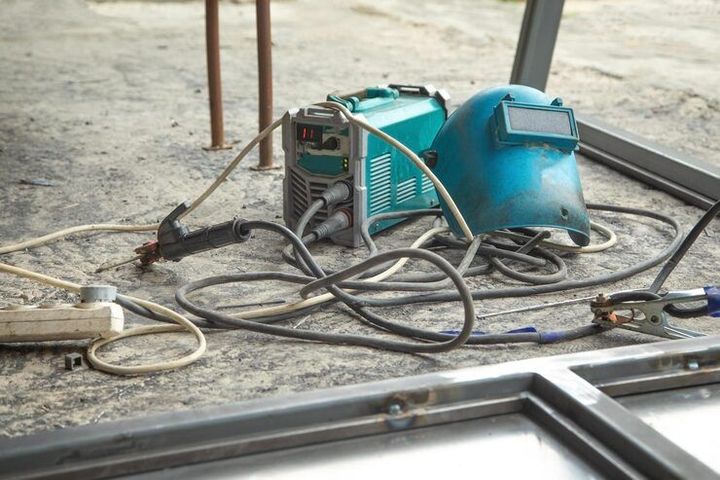
A welding system normally involves more than the power source itself. Depending on the process, it may include a welding torch or electrode holder, cables, electrodes or filler material, shielding gas equipment, clamps, regulators, and protective equipment.
Basic welding process
Most welding methods follow a general sequence. The workpieces are positioned and prepared, heat or pressure is applied to the joint area, and the material is allowed to cool or solidify into a joined section.
The exact process varies considerably. In arc welding, an electrical arc generates intense heat. In resistance welding, electrical resistance at the contact area generates heat while pressure is applied to the workpieces.
Importance
Welding machines are important because many products and structures require strong permanent joints between metal components. The selected welding process can influence joint characteristics, production speed, material compatibility, appearance, and the amount of preparation required.
Welding is used by professional fabricators, industrial production facilities, maintenance teams, automotive manufacturers, metalworkers, and other users working with metallic components. The appropriate equipment depends on the application rather than simply on the machine's power rating.
Why welding method matters
Different welding techniques produce different results. MIG welding, for example, continuously feeds a wire electrode and normally uses shielding gas. TIG welding uses a non-consumable tungsten electrode and provides greater control over the welding arc, while a separate filler material may be added when required.
Shielded metal arc welding uses a flux-coated consumable electrode. The coating helps create shielding during the welding process and produces slag that is removed after welding.
The following table provides a simplified comparison.
| Welding type | Electrode or heat source | Typical characteristic | Common applications |
|---|---|---|---|
| MIG/GMAW | Continuously fed wire | Continuous wire feeding | Fabrication and production |
| TIG/GTAW | Tungsten electrode | High control of arc | Precision metal joining |
| Stick/SMAW | Flux-coated electrode | Portable and versatile process | Fabrication and maintenance |
| Resistance welding | Electrical resistance and pressure | Localized heating | Sheet-metal production |
| Gas welding | Fuel gas and oxygen flame | Flame-based heating | Selected repair and fabrication work |
Factors affecting welding results
Welding quality depends on several variables rather than the machine alone. Important factors include:
- Base-metal type and thickness
- Joint design and preparation
- Welding current and voltage
- Travel speed
- Electrode or wire selection
- Shielding method
- Heat input
- Operator technique
- Surface cleanliness
Poor preparation or inappropriate settings can result in defects such as porosity, incomplete fusion, cracking, distortion, or excessive spatter.
Recent Updates
Welding technology has increasingly incorporated digital controls, inverter-based power sources, automation, sensors, and data monitoring. Modern equipment can provide more precise control over welding parameters than many older transformer-based systems.
Inverter welding machines
Inverter technology has become common across several welding-machine categories. An inverter converts incoming electrical power into a high-frequency form that can then be controlled and converted into the output required for welding.
These systems can be relatively compact compared with traditional transformer-based equipment and can provide electronic control over welding parameters. The actual capabilities vary by machine design and welding process.
Automated and robotic welding
Industrial welding is also increasingly integrated with robotic and automated production systems. Automated equipment can repeat programmed movements and maintain consistent process parameters under controlled production conditions.
Sensors and monitoring systems can provide information about current, voltage, wire feeding, temperature, and other process variables. Data collection can also support process documentation and production analysis.
Digital controls
Digital interfaces are increasingly used to configure welding parameters. Depending on the equipment, users may be able to select process modes, adjust current or voltage, control wire-feed parameters, or store settings.
These features can simplify parameter management, but they do not eliminate the need for appropriate material preparation, process knowledge, and welding procedures.
Energy and material efficiency
Manufacturing environments are also paying greater attention to energy consumption, material utilization, and process efficiency. Welding equipment manufacturers have responded with power-source designs and control systems intended to improve electrical efficiency and process control.
The practical result depends on the welding process, equipment configuration, duty cycle, materials, and operating conditions.
Laws or Policies
Welding equipment and welding operations are affected by workplace safety requirements, electrical regulations, equipment standards, and occupational exposure controls. The specific rules vary by jurisdiction and by the type of workplace.
Safety requirements commonly address electrical hazards, fire risks, ventilation, compressed gases, welding fumes, personal protective equipment, and the handling of hot materials.
Welding safety requirements
A welding area generally needs appropriate controls for hazards associated with heat, sparks, ultraviolet radiation, fumes, and electrical energy. Depending on the process and workplace, relevant measures can include:
- Suitable eye and face protection
- Protective clothing and gloves
- Adequate ventilation or fume extraction
- Electrical grounding and equipment inspection
- Fire-prevention measures
- Appropriate handling of compressed-gas cylinders
- Separation of combustible materials from the welding area
Welding fumes can contain substances generated from the base metal, coatings, electrodes, and shielding or process materials. Ventilation and exposure controls are therefore important considerations.
Equipment standards
Welding machines may be designed and tested according to technical standards covering electrical safety, electromagnetic compatibility, performance, and other characteristics. Standards vary according to the equipment category and jurisdiction.
Organizations such as the International Organization for Standardization, the International Electrotechnical Commission, and professional welding bodies publish standards and technical documents covering various aspects of welding and welding equipment.
Because requirements differ between locations and applications, current local regulations and applicable technical standards should be checked when equipment is being installed or used in a regulated workplace.
Tools and Resources
Several resources can help users understand welding machines and select appropriate welding processes.
Welding procedure documents
A welding procedure specification, commonly known as a WPS, describes the variables used for a particular welding application. Depending on the applicable standard, it can include information about the welding process, base material, filler material, electrical parameters, joint design, shielding gas, and other conditions.
Procedure qualification documents may also be used where required by applicable standards or project specifications.
Welding calculators and reference charts
Reference charts can help users understand relationships between material thickness, electrode or wire diameter, current range, shielding gas, and welding process. These references should be treated as starting points because actual parameters depend on the specific equipment and application.
Manufacturer documentation
Machine manuals contain important information about electrical requirements, duty cycle, operating controls, compatible accessories, maintenance, and safety precautions. Technical documentation for electrodes, filler metals, and shielding gases can provide additional information about their intended applications.
Equipment selection checklist
Before selecting a welding machine, relevant factors include:
- Welding process required
- Material type
- Material thickness
- Required output range
- Duty cycle
- Electrical supply
- Portability requirements
- Electrode, wire, or filler compatibility
- Shielding-gas requirements
- Available safety controls
- Intended frequency of use
A machine designed for one welding process may not be appropriate for another, even when both processes are used to join similar metals.
FAQs
What is a welding machine?
A welding machine is equipment that supplies the heat, electrical energy, pressure, or combination of energy needed for a particular welding process. Different machines are designed for processes such as MIG, TIG, stick, and resistance welding.
What are the main types of welding machines?
Common categories include MIG welding machines, TIG welding machines, stick welding machines, and resistance welding equipment. The differences relate to electrode type, heat generation, shielding method, and how the welding material is introduced into the joint.
How does a MIG welding machine work?
A MIG welding machine continuously feeds a consumable wire electrode toward the welding area. An electric arc forms between the wire and workpiece, producing heat that melts the wire and part of the base material. Shielding gas normally protects the molten weld area from atmospheric contamination.
What should be considered when selecting a welding machine?
Material type and thickness, welding process, required current range, duty cycle, electrical supply, portability, electrode or wire requirements, shielding method, and intended application should all be considered. Workplace conditions and applicable safety requirements are also relevant.
What is the difference between MIG and TIG welding?
MIG welding uses a continuously fed consumable wire electrode, while TIG welding uses a non-consumable tungsten electrode. TIG generally provides greater control over the arc and is commonly used where precise heat control is important, while MIG is frequently used for applications involving continuous wire feeding.
Conclusion
Welding machines use different methods to generate heat or pressure for joining metal components, with MIG, TIG, stick, resistance, and gas welding representing distinct process categories. Machine selection depends on material, thickness, welding method, electrical requirements, duty cycle, and workplace conditions. Recent developments include inverter power sources, digital controls, automation, sensors, and process monitoring. Safe operation also requires attention to electrical hazards, fumes, heat, radiation, fire risks, and applicable workplace requirements.