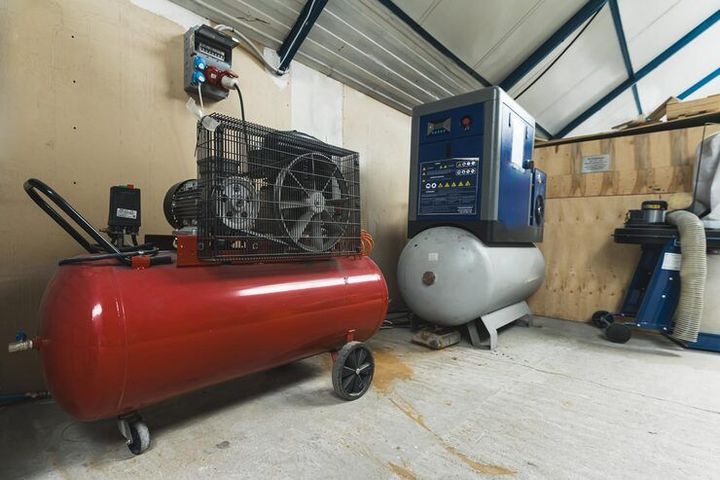
Air Compressor Insights: Technologies, Components and Industrial Applications
An air compressor is a mechanical device that takes in atmospheric air, reduces its volume, and increases its pressure for use in equipment, tools, processes, and industrial systems. Compressed air is commonly treated as a form of stored energy because the pressurized air can later be released to perform mechanical or process-related work.
Context
The basic idea behind compressed air has existed for centuries, while modern air compressor systems developed alongside industrial machinery. Early equipment relied on relatively simple piston arrangements, whereas modern systems can use rotary screws, centrifugal mechanisms, scroll elements, or other compression technologies.
An air compressor system normally includes more than the compressor itself. Components such as air receivers, filters, dryers, separators, valves, controllers, pressure sensors, and distribution piping can all influence how compressed air is produced and delivered.
Different industries require different pressure, flow, air-quality, and operating characteristics. A workshop using pneumatic tools may have different requirements from a food-processing plant, chemical facility, electronics manufacturer, or large production site.
How compression works
The fundamental compression process involves drawing atmospheric air into a compression chamber and reducing its volume. Depending on the compressor design, mechanical components such as pistons, screws, scrolls, or impellers create the pressure increase.
After compression, the air may pass through cooling, moisture separation, filtration, and storage stages before reaching the point of use. The exact arrangement depends on the application and required air quality.
Common air compressor technologies
Air compressors can broadly be divided into positive-displacement and dynamic types.
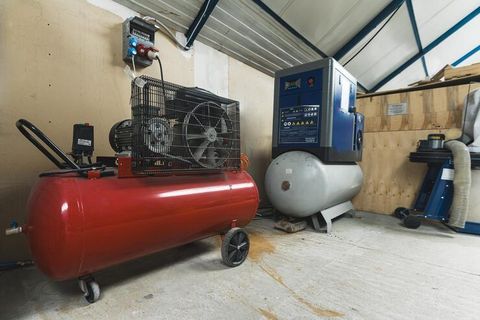
Positive-displacement compressors trap a quantity of air and mechanically reduce its volume. Reciprocating piston and rotary screw compressors are common examples.
Dynamic compressors increase air velocity and then convert that velocity into pressure. Centrifugal compressors use rotating impellers and are generally associated with larger continuous-flow applications.
| Compressor technology | Basic operating principle | Common application areas |
|---|---|---|
| Reciprocating piston | Air is compressed by piston movement | Workshops, intermittent pneumatic equipment |
| Rotary screw | Rotating screw elements compress trapped air | Industrial production and continuous operation |
| Scroll | Two spiral elements compress air progressively | Specialized clean or lower-flow applications |
| Centrifugal | High-speed rotating impeller increases air velocity | Large-scale continuous processes |
| Rotary vane | Sliding vanes reduce air volume | Industrial equipment and process applications |
Importance
Compressed air plays an important role in many industrial environments because it can operate pneumatic equipment, move materials, control machinery, and support manufacturing processes. It can also be distributed through piping from a central compressor room to multiple production areas.
The technology is relevant to operators, engineers, maintenance teams, manufacturers, and facility managers because changes in pressure, air quality, temperature, or demand can affect downstream equipment.
Industrial uses of compressed air
Compressed air can be used for a wide range of functions, including:
- Operating pneumatic cylinders and actuators
- Powering pneumatic tools
- Controlling automated machinery
- Cleaning selected industrial equipment where appropriate
- Supporting packaging processes
- Assisting material-handling systems
- Supplying air for selected manufacturing processes
- Supporting instrumentation and control systems
The required air characteristics vary considerably between applications. Some processes require relatively clean and dry air, while others may have less demanding requirements.
Components of an air compressor system
A compressor installation generally contains several interconnected components. Understanding their roles helps explain why the compressor itself is only one part of the overall system.
The air receiver stores compressed air and can help accommodate fluctuations between supply and demand. Filters remove selected particles, oil aerosols, or other contaminants depending on their design. Dryers reduce moisture in compressed air, while separators can remove condensed liquid from the air stream.
Pressure regulators adjust downstream pressure for equipment that requires a particular operating range. Valves control air movement, while sensors and controllers monitor operating conditions.
Air quality and moisture
Atmospheric air contains water vapor, and compression can cause moisture to condense as the air cools. Excess moisture may contribute to corrosion, equipment problems, or process contamination in applications where dry air is required.
Drying technologies include refrigerated dryers and desiccant dryers. The appropriate approach depends on the required pressure dew point, operating environment, and application.
Air filtration can also be arranged in stages. Different filters are designed to address different types and sizes of contaminants, so filtration should be matched to the intended air-quality requirements.
Recent Updates
Recent developments in air compressor technology have focused on energy management, variable-speed operation, system monitoring, heat recovery, and improved controls. These developments reflect the fact that compressor systems can operate for long periods in industrial environments, making operating efficiency an important engineering consideration.
Variable-speed technology
Variable-speed drive systems adjust motor speed according to changing compressed-air demand. Instead of maintaining a fixed operating pattern under all conditions, the compressor can modify output within its designed operating range.
This approach can be particularly relevant where air demand changes throughout the production cycle. Actual performance depends on compressor design, control settings, operating conditions, and system demand.
Digital monitoring
Modern compressor systems increasingly incorporate sensors and electronic controls. Parameters such as pressure, temperature, operating hours, motor status, and maintenance indicators can be monitored through local interfaces or connected monitoring systems.
Data collection can help operators identify changes in operating patterns and investigate potential abnormalities. Digital monitoring does not eliminate the need for physical inspection and appropriate maintenance procedures.
Heat recovery
Compression generates heat. In some installations, part of this heat can be recovered and redirected toward suitable heating processes, water heating, or other facility requirements.
The practical value of heat recovery depends on the compressor's operating profile, temperature requirements, facility layout, and availability of a suitable heat demand.
System-level efficiency
Current industry discussions increasingly consider the complete compressed-air system rather than focusing only on the compressor. Air leaks, inappropriate pressure settings, undersized or poorly arranged piping, clogged filters, and unnecessary demand can influence overall system performance.
A system-level assessment can therefore consider:
- Compressor loading patterns
- Air demand throughout production
- Pressure requirements
- Leakage levels
- Dryer and filtration requirements
- Storage capacity
- Distribution piping
- Control strategies
Laws or Policies
Air compressor installations can be affected by several categories of regulations and technical requirements. These may concern pressure vessels, electrical equipment, workplace safety, environmental conditions, noise, energy efficiency, and equipment operation.
Requirements vary by jurisdiction and by the characteristics of the installation. An air receiver, for example, may be subject to pressure-vessel inspection or registration requirements because it stores compressed gas under pressure.
International standards are also used to describe aspects of compressor performance, testing, safety, and air quality. ISO standards cover various areas of compressed-air systems, including terminology, measurement, testing, and compressed-air contaminants.
Workplace requirements may address guarding, electrical isolation, pressure relief, noise exposure, and safe operating procedures. The exact requirements depend on the installation and applicable local regulations.
For projects involving regulated pressure equipment, the relevant national authority, applicable technical standards, and qualified engineering personnel should be consulted. Regulations can change, and requirements may differ according to equipment type and installation conditions.
Tools and Resources
Several resources can help readers understand, assess, or document compressed-air systems.
Compressor sizing information
Compressor selection commonly involves reviewing required pressure, flow rate, duty cycle, air quality, operating hours, ambient conditions, and future demand. Manufacturer technical documentation and engineering calculators can help convert between commonly used pressure and flow units.
Important parameters may include:
- Flow rate
- Operating pressure
- Motor power
- Duty cycle
- Pressure dew point
- Receiver volume
- Inlet conditions
- Required air quality
Compressed-air calculators
Engineering calculators can estimate airflow requirements, pressure losses, receiver capacity, leakage, and energy-related parameters. These tools are useful for preliminary analysis, but their results depend on the quality of the input information and the assumptions used.
Maintenance records
A maintenance record can document operating hours, filter changes, inspections, temperatures, pressure readings, alarms, and other observations. A structured record can help establish operating history and identify changes over time.
Technical standards and guidance
Organizations such as ISO and national standards bodies publish documents related to compressed-air systems, pressure equipment, energy management, and industrial safety. Technical guidance can help users understand terminology and measurement methods before detailed engineering work is undertaken.
FAQs
What are the main types of air compressor technologies?
Common air compressor technologies include reciprocating piston, rotary screw, rotary vane, scroll, and centrifugal compressors. Their operating principles, pressure ranges, airflow characteristics, and suitable applications differ.
How do air compressor components work together?
The compressor generates pressurized air, while components such as receivers, dryers, filters, separators, regulators, valves, sensors, and piping prepare and distribute that air. The complete arrangement depends on the required pressure, flow, and air quality.
What are air compressors used for in industrial applications?
Industrial air compressors can power pneumatic tools and actuators, support automation, operate packaging equipment, assist material handling, and provide compressed air for selected manufacturing processes.
What is the difference between a rotary screw and piston air compressor?
A piston compressor uses reciprocating piston movement to compress air, while a rotary screw compressor uses rotating screw elements. Piston systems are often associated with intermittent demand, while rotary screw systems are commonly used where a more continuous compressed-air supply is required.
Why is moisture management important in compressed-air systems?
Compressed air can contain moisture that may condense as temperatures change. Dryers, separators, and appropriate drainage arrangements can help manage this moisture where dry compressed air is required.
Conclusion
Air compressors convert atmospheric air into pressurized air for use across manufacturing, automation, workshops, processing, and other industrial environments. Compressor technologies differ in their operating principles, while components such as dryers, filters, receivers, valves, and controls form an important part of the complete system. Recent developments have focused on variable-speed operation, digital monitoring, heat recovery, and system-level energy management. Proper application depends on pressure, airflow, air quality, operating conditions, and the requirements of the equipment using the compressed air.