Industrial Slicing Machine Guide: Machine Types, Cutting Methods, Components and Industrial Uses
An industrial slicing machine is equipment designed to divide materials into consistent slices, sections, strips, or pieces for further processing, packaging, assembly, or manufacturing. Depending on the application, an industrial slicing machine may be designed for food products, rubber, plastics, foam, paper, textiles, metals, wood-based materials, or other industrial materials.
Context
Slicing has been performed manually for centuries, but industrial production requires greater consistency and repeatability. As manufacturing processes developed, mechanical cutting equipment evolved from relatively simple blade arrangements into machines incorporating powered drives, adjustable cutting systems, conveyors, sensors, programmable controls, and automated material handling.
The basic principle remains relatively simple. A material is positioned and moved toward a cutting element, while the machine controls the movement, cutting action, and resulting dimensions. The exact process varies according to the material and the required slice thickness.
How an industrial slicing machine works
A typical slicing machine follows several basic stages:
Material loading places the workpiece or product into the designated feeding area.
Material positioning aligns the product with the cutting mechanism.
Feeding moves the material toward the blade at a controlled rate.
Cutting separates the material into predetermined sections.
Discharge moves the sliced material away from the cutting area.
Collection gathers the finished pieces for subsequent processing.
Some machines perform these stages continuously, while others use intermittent movement. The choice depends on the material, production arrangement, required dimensions, and cutting method.
Common slicing machine categories
Industrial slicing machines can be classified according to their cutting mechanism, material type, feeding arrangement, or degree of automation.
| Machine type | Typical cutting approach | Common application area |
|---|---|---|
| Rotary slicing machine | Rotating blade or cutting assembly | Continuous material processing |
| Guillotine slicing machine | Linear blade movement | Sheets, blocks and rigid materials |
| Band knife slicing machine | Continuous moving blade | Food, foam and flexible materials |
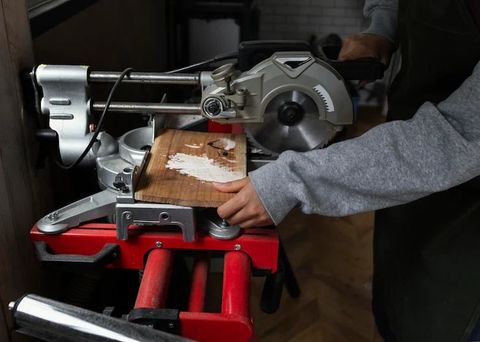
| Circular blade slicer | Rotating circular blade | Food, films and selected industrial materials |
| Slitting machine | Multiple blades or knives | Web materials, films and rolls |
| Ultrasonic slicer | High-frequency vibrating blade | Selected food and delicate materials |
| Automated slicing machine | Controlled feeding and cutting | Repetitive industrial production |
The terminology can vary between manufacturers and industries, so the same machine category may have different names in different applications.
Importance
Industrial slicing machines are important where consistent dimensions, repeatable processing, and controlled material handling are required. Manual cutting can become difficult when large quantities of material must be divided into similar pieces or when the material requires a specific cutting pattern.
The equipment is used across many manufacturing environments. Food processing is one familiar application, while other examples include flexible packaging materials, foam products, rubber components, textiles, paper products, plastics, and selected manufactured materials.
Consistency in production
One important function of an industrial slicing machine is maintaining a relatively consistent slice dimension. Consistent cutting can simplify later stages such as stacking, forming, packaging, assembly, or additional machining.
The actual achievable consistency depends on the machine design, blade condition, material characteristics, feeding system, adjustment method, and operating conditions. Material deformation can also affect the final dimensions.
Production workflow
Slicing equipment can become part of a larger production line. A conveyor may move material toward the machine, while sensors detect position or product presence. After cutting, another conveyor or handling mechanism can move the pieces toward inspection, packaging, or another processing stage.
Automation can reduce the amount of repetitive manual handling required around the cutting process. However, automation also introduces additional control systems and moving components that need appropriate operation and maintenance procedures.
Material-specific requirements
Different materials respond differently to cutting. A rigid block may require a firm cutting action, while a soft or flexible material may compress or deform during slicing.
Important material characteristics can include:
Hardness
Thickness
Flexibility
Temperature
Moisture content
Surface condition
Density
Shape and dimensions
For this reason, an industrial slicing machine designed for one material may not be suitable for another without appropriate engineering evaluation.
Recent Updates
Industrial slicing equipment has increasingly incorporated automation, electronic controls, sensors, and digital monitoring. These developments are part of a wider movement toward connected manufacturing, where machines exchange operating information with production systems.
Automation and programmable controls
Modern machines may use programmable logic controllers, touchscreen interfaces, variable-speed drives, and electronically controlled feeding mechanisms. These components allow operators to adjust parameters such as feed speed, cutting intervals, or production sequences according to the machine design.
Automated recipe or parameter storage can also help maintain consistent machine settings between production runs. The available functions vary considerably between machine types.
Sensor-based operation
Sensors can detect material position, machine conditions, or the presence of objects within designated areas. Such systems can coordinate feeding and cutting operations and can also be integrated into machine-control systems.
Sensor technology does not eliminate the need for physical safeguards. Cutting machinery still contains moving components and sharp cutting elements that require appropriate protection.
Energy and material efficiency
Manufacturers are also paying attention to energy consumption, material utilization, blade life, and reduction of production waste. Improved control over feeding and cutting can help reduce unnecessary material loss in suitable applications.
These developments are not universal across all industrial slicing machines. Older equipment can continue to perform useful production tasks where its configuration remains appropriate and its condition is adequately maintained.
Laws or Policies
Industrial slicing machines are generally subject to machinery safety, workplace protection, electrical safety, and equipment-conformity requirements in the jurisdiction where they are manufactured, installed, or operated. The exact requirements differ between countries and regions.
Common regulatory considerations can include:
Machine guarding around hazardous moving parts
Emergency stopping arrangements
Electrical protection
Safety-related control systems
Operator instructions and warnings
Risk assessment
Maintenance procedures
Safe access to cutting areas
Appropriate training for machine operators
International standards can also provide technical frameworks for machinery safety. Standards such as ISO 12100 address principles for machinery risk assessment and risk reduction, while ISO 13849 concerns safety-related parts of control systems.
Food-processing slicing equipment can be subject to additional requirements concerning hygienic design, materials that contact food, cleaning procedures, and contamination control. Requirements depend on the intended application and jurisdiction.
Compliance should therefore be evaluated according to the applicable local laws, standards, machine configuration, and intended use. A general description of machinery standards should not be treated as a substitute for a jurisdiction-specific compliance assessment.
Tools and Resources
Several technical resources can help readers understand industrial slicing equipment and its operation.
Machine manuals and technical documentation
Manufacturer documentation normally provides information about machine specifications, operating procedures, blade arrangements, adjustment ranges, maintenance intervals, and applicable material limitations. Technical documentation should correspond to the particular machine model rather than being treated as universal guidance.
Cutting parameter records
Production environments may maintain records covering:
Material type
Material dimensions
Slice thickness
Feed rate
Cutting speed
Blade configuration
Production quantity
Inspection results
Such records can help identify changes in machine performance and provide useful information for process monitoring.
Measurement equipment
Calipers, micrometers, rulers, thickness gauges, and other measurement instruments can be used where dimensional inspection is required. The appropriate instrument depends on the material and the required measurement range and precision.
Industry standards databases
Standards organizations and regulatory authorities publish technical information covering machinery safety, electrical systems, product handling, and sector-specific requirements. These resources are useful when determining which standards may apply to a particular machine or production environment.
FAQs
What is an industrial slicing machine?
An industrial slicing machine is equipment designed to divide materials into consistent slices or sections using a controlled cutting mechanism. The machine configuration depends on the material, required dimensions, production method, and intended industrial use.
What are the main types of industrial slicing machines?
Common types include rotary slicers, guillotine slicing machines, band knife machines, circular blade slicers, slitting machines, ultrasonic slicers, and automated slicing systems. Each type uses a different cutting approach and may be designed for specific material characteristics.
How does an industrial slicing machine work?
An industrial slicing machine generally positions material, feeds it toward a cutting mechanism, separates it using a blade or other cutting element, and transfers the finished pieces away from the cutting area. Some machines repeat this process continuously, while others operate in individual cycles.
What components are found in an industrial slicing machine?
Typical components include a frame, feeding mechanism, cutting assembly, drive system, control system, sensors, material guides, discharge mechanism, and protective guarding. The exact components vary according to machine design and application.
What factors affect industrial slicing machine performance?
Material properties, blade condition, slice thickness, feed speed, cutting speed, machine alignment, and maintenance can all affect slicing performance. Proper machine configuration is also important because cutting requirements vary significantly between materials.
Conclusion
An industrial slicing machine uses a controlled cutting mechanism to divide materials into predetermined sections for further manufacturing or processing. Machine types range from rotary and circular blade systems to guillotine, band knife, slitting, ultrasonic, and automated designs. Recent equipment increasingly incorporates electronic controls, sensors, and automated material handling, while safety requirements continue to emphasize guarding, risk assessment, and controlled operation. The appropriate machine configuration depends on material characteristics, required dimensions, production conditions, and the applicable technical requirements.