Lithium Battery Manufacturing Details: Raw Materials, Cell Assembly, Machinery and Technologies
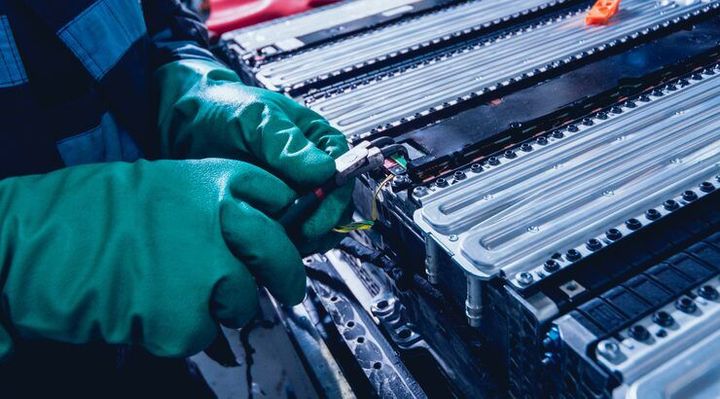
Lithium battery manufacturing is a multi-stage industrial process that converts processed materials into electrochemical cells and then combines cells into modules or battery packs. A lithium-ion cell generally contains a cathode, anode, separator, electrolyte, current collectors, housing, and electrical connections.
Context
Lithium-ion batteries emerged from decades of electrochemistry research and entered commercial use in the 1990s. Production has since expanded from portable electronics into electric mobility, stationary energy storage, and industrial equipment.
Battery production includes material preparation, electrode manufacturing, cell assembly, electrolyte filling, formation, aging, testing, and final integration. Process control is important because variations in moisture, coating thickness, alignment, pressure, temperature, or electrical behavior can affect cell performance and safety.
Importance
Lithium battery manufacturing matters because rechargeable cells are used in products that require portable or stored electrical energy. Applications range from consumer electronics and electric vehicles to grid storage and industrial equipment.
The manufacturing process addresses practical requirements involving energy density, cycle life, thermal behavior, mechanical strength, consistency, and production scale. Different cell chemistries are selected according to the intended application rather than one chemistry being suitable for every use.
Raw materials
A typical lithium-ion cell uses several material groups. The cathode contains a lithium-bearing active material, while the anode commonly uses graphite or another carbon-based material. A separator keeps the electrodes apart while allowing ionic movement through the electrolyte.
Common material categories include:
- Cathode active materials such as lithium iron phosphate (LFP) and nickel-manganese-cobalt (NMC) compounds.
- Anode materials such as graphite and, in some designs, silicon-containing materials.
- Electrolytes containing a lithium salt dissolved in an organic solvent system.
- Separator films made from porous polymer materials.
- Copper and aluminium foils used as current collectors.
- Conductive additives and binders used in electrode coatings.
- Housing materials, tabs, seals, and other cell components.
Cell formats
Three common cell formats are cylindrical, prismatic, and pouch. Cylindrical cells use a rigid metal case, prismatic cells use a larger rigid enclosure, and pouch cells use a flexible laminated enclosure.
| Cell format | Typical construction | Manufacturing consideration |
|---|---|---|
| Cylindrical | Rolled electrode assembly in a metal case | Winding and precise component placement |
| Prismatic | Stacked or wound electrodes in a rigid case | Alignment and case sealing |
| Pouch | Electrode stack or winding in a flexible pouch | Sealing and moisture control |
Electrode manufacturing
Electrode production begins by preparing a mixture containing active material, conductive additives, binder, and a suitable processing medium. The mixture is blended to achieve consistent distribution.
The prepared material is coated onto a metal current collector. Cathode coatings generally use aluminium foil, while anode coatings generally use copper foil. After coating, the electrodes are dried and compressed to reach specified thickness and density.
The coated material is then cut or slit into required dimensions. Slitting and edge inspection prepare electrode rolls or sheets for cell assembly.
Cell assembly
Cell assembly brings positive and negative electrodes together with the separator. The method depends on the cell format and can involve winding or stacking.
In wound cells, electrode and separator sheets are rolled into a controlled structure. In stacked designs, layers are positioned in a repeated sequence and connected to current-collection structures.
The assembled structure is placed into its enclosure. Sealing and insulation steps are performed before electrolyte filling. Production areas normally use controlled environmental conditions because moisture can affect sensitive cell materials.
Electrolyte filling, formation and aging
Electrolyte filling introduces the ionic medium required for electrochemical operation. The cell is then sealed and moved through formation, where controlled electrical charging and discharging establish initial electrochemical characteristics.
Formation is important because it contributes to the development of the solid-electrolyte interphase and other cell characteristics. Cells may then undergo aging and monitoring before final classification.
Testing and quality control
Manufacturers use electrical, mechanical, dimensional, and environmental checks throughout production. Measurements can include voltage, capacity, internal resistance, leakage, thickness, mass, insulation, and visual condition.
Automated inspection can use cameras, sensors, electrical measurement equipment, and process data to identify deviations. Statistical process monitoring can also help identify changes in production conditions.
Machinery used in lithium battery manufacturing
Specialized equipment is used throughout the production line. Important machinery includes:
- Mixing systems for electrode materials.
- Coating machines for applying electrode material to current-collector foil.
- Drying systems for removing processing media.
- Calendering machines for controlled electrode compression.
- Slitting machines for preparing coated rolls.
- Winding or stacking machines for cell assembly.
- Welding equipment for tabs and electrical connections.
- Electrolyte filling systems for controlled liquid addition.
- Formation and cycling equipment for controlled charge-discharge sequences.
- Inspection systems for dimensional, visual, and electrical checks.
Recent Updates
Lithium-ion manufacturing has continued to expand while manufacturers have also changed cell chemistry and production methods. The International Energy Agency reported that global nameplate lithium-ion manufacturing capacity exceeded 4 TWh by the end of 2025, with production capacity remaining geographically concentrated.
LFP chemistry has gained a larger role in electric-vehicle batteries, while NMC remains important in applications where its material combination and energy characteristics are suitable. This shift affects raw-material requirements, electrode processing, cell design, and supply-chain planning.
Manufacturing technology developments
Dry-electrode processing is another area of manufacturing research. Conventional electrode production commonly uses a liquid-based coating process followed by drying. Dry processing seeks to change or reduce some of these steps, although industrial implementation depends on chemistry, equipment design, process control, and production requirements.
Solid-state batteries are progressing through prototypes and pilot-scale development. Current industry analysis indicates that large-scale deployment remains less mature than conventional lithium-ion production, so solid-state technology is an emerging manufacturing pathway rather than an established replacement across the industry.
Sodium-ion batteries are also receiving increased attention. They are not lithium-ion batteries, but developments in sodium-ion production can influence battery manufacturing equipment, material supply chains, and factory design. Their manufacturing capacity remains much smaller than lithium-ion capacity.
Laws or Policies
Battery manufacturing is affected by product-safety rules, environmental requirements, transportation requirements, workplace controls, chemical-handling rules, waste frameworks, and market-access requirements. Exact obligations vary according to jurisdiction, battery category, manufacturing activity, and intended application.
Applicable requirements should be checked against the current rules and technical standards for the relevant jurisdiction and activity.
Battery information and sustainability rules
The European Union provides one example of a developing battery framework. Its Batteries Regulation includes requirements related to sustainability, labeling, due diligence, recycling, recycled content, and digital battery information. It also establishes a battery passport for specified battery categories, with the passport requirement beginning in 2027 for covered batteries.
The European Commission has published implementation guidance for the digital battery passport, describing data points that organizations may need to prepare for covered battery categories. The relevant passport requirements begin in February 2027 for specified batteries.
These requirements illustrate why battery manufacturing increasingly involves material information, traceability, product data, recycling information, and documentation in addition to physical production processes.
Tools and Resources
Several technical resources help explain lithium battery manufacturing. Process-flow diagrams can map the movement from raw materials through electrode production, cell assembly, formation, testing, and pack integration.
Manufacturing engineers use process-control software, statistical analysis tools, battery cyclers, laboratory instruments, and digital production records to track process parameters and production results.
Useful reference categories include battery testing standards, technical databases on battery materials, battery management system documentation, material safety documentation, energy reports, and regulatory databases.
FAQs
What are the main raw materials used in lithium battery manufacturing?
Common material groups include lithium-containing cathode materials, graphite or other anode materials, electrolyte components, polymer separators, copper and aluminium current collectors, binders, conductive additives, and enclosure materials.
How are lithium-ion battery cells assembled?
Electrodes are prepared and cut or slit before being combined with a separator through winding or stacking. The assembly is placed into a cell enclosure, electrical connections are made, electrolyte is introduced, and the cell undergoes sealing, formation, aging, and testing.
What machinery is used in lithium battery manufacturing?
Typical equipment includes mixers, coating machines, drying systems, calenders, slitters, winding or stacking machines, welding equipment, electrolyte filling systems, formation equipment, and automated inspection systems.
What is the role of formation in lithium battery manufacturing?
Formation uses controlled electrical cycles to establish the initial electrochemical behavior of a newly assembled cell. It is followed by monitoring and, depending on the process, aging and classification.
How are lithium battery manufacturing technologies changing?
Current development includes improvements in LFP and other lithium-ion chemistries, automation, digital process monitoring, dry-electrode research, improved cell designs, recycling processes, and emerging technologies such as solid-state and sodium-ion batteries.
Conclusion
Lithium battery manufacturing combines material preparation, electrode production, cell assembly, electrolyte filling, formation, aging, testing, and pack integration. Raw materials and cell chemistry influence the equipment, process conditions, and quality controls used at each stage. Recent development has focused on manufacturing scale, LFP chemistry, automation, digital traceability, dry processing, recycling, and emerging battery technologies. Regulatory requirements vary by jurisdiction, so current official rules and technical standards remain important when manufacturing activities are evaluated.