Explore Injection Molding Machine Types, Components and Manufacturing Applications
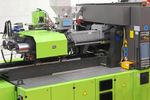
Injection molding is a manufacturing process used to produce plastic parts by heating a material until it becomes capable of flowing, forcing it into a shaped mold, and allowing it to solidify. An injection molding machine provides the controlled pressure, temperature, movement, and timing needed to repeat this process across many production cycles.
Context
The basic concept developed from early molding methods and became increasingly important as thermoplastics and industrial plastics became widely used. Modern injection molding machines can process different polymer materials and produce parts ranging from small precision components to larger housings, containers, automotive components, and industrial products.
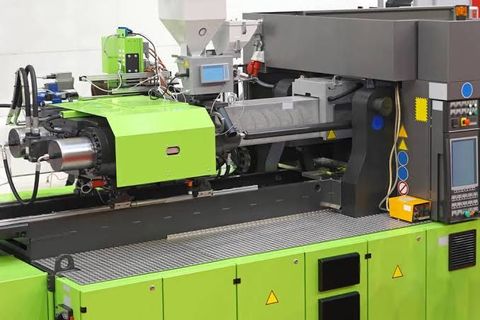
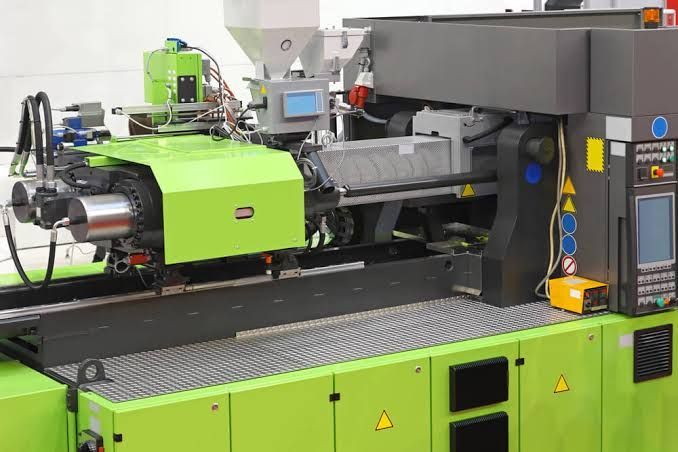
An injection molding machine generally combines a material feed system, heating and injection unit, clamping system, mold, control system, and supporting hydraulic or electric mechanisms. The machine must coordinate these components so that molten material enters the mold cavity under controlled conditions.
How injection molding works
The process normally begins when plastic pellets or other suitable molding material enter a hopper. A rotating screw moves the material through a heated barrel, where controlled heat and mechanical movement prepare it for injection.
The screw then moves forward and pushes the prepared material through a nozzle into the closed mold. Pressure is maintained while the material fills the cavity and begins to cool. Once the part has solidified sufficiently, the mold opens and an ejection mechanism removes the molded component.
The basic sequence can be summarized as:
- Material feeding
- Heating and plasticization
- Mold closing
- Injection
- Holding and packing
- Cooling
- Mold opening
- Part ejection
Main machine types
Injection molding machines can be categorized according to their drive system, structure, and application.
| Machine type | Main operating characteristic | Common application areas |
|---|---|---|
| Hydraulic | Uses hydraulic systems for machine movement | General plastic components and larger molded parts |
| Electric | Uses electric motors and servo drives | Precision components, packaging and automated production |
| Hybrid | Combines hydraulic and electric systems | Applications requiring a combination of characteristics |
| Vertical | Uses a vertical clamping arrangement | Inserts, specialized components and selected assembly processes |
| Horizontal | Uses a horizontal clamping arrangement | General-purpose industrial molding |
| Multi-material | Processes two or more materials or colors | Multi-component and appearance-focused parts |
Machine selection depends on factors such as material, mold design, required clamping force, part dimensions, production cycle, precision requirements, and automation configuration.
Importance
Injection molding machines are important because they allow manufacturers to create repeatable plastic components with controlled dimensions and shapes. The process is used across many industries because molds can be designed for relatively simple shapes as well as complex geometries.
The technology also supports different production requirements. A small machine may be configured for compact components, while larger machines can accommodate molds designed for bigger products.
Manufacturing applications
Injection molding is used across a broad range of manufacturing sectors. Typical applications include:
- Automotive components such as interior parts, covers, clips, and housings
- Consumer products such as containers, handles, cases, and household components
- Electrical and electronic housings, connectors, and protective components
- Packaging products such as caps, closures, containers, and thin-wall components
- Medical and laboratory components where suitable materials, equipment, and controlled manufacturing environments are required
- Industrial components including fittings, protective covers, gears, and structural parts
The exact suitability of injection molding depends on material properties, mold design, dimensional requirements, production conditions, and applicable manufacturing controls.
Major components of an injection molding machine
An injection molding machine contains several interconnected systems.
The hopper receives the molding material and directs it toward the barrel. The barrel contains heating elements and the screw assembly that prepares the material for injection.
The screw performs several functions. It conveys the material forward, contributes to melting through mechanical movement and controlled heating, and then pushes the prepared material into the mold.
The nozzle forms the connection between the injection unit and mold. Its design influences how material enters the mold and must correspond with the mold and material being processed.
The clamping unit holds the mold halves together during injection and cooling. It must generate sufficient force to keep the mold closed while material pressure is applied.
The mold itself contains one or more cavities that determine the shape of the finished component. Cooling channels within the mold can help control the temperature of the molded material and influence cycle conditions.
The control system coordinates temperature, screw movement, injection pressure, speed, clamping movement, and other machine parameters. Modern machines commonly use digital interfaces that allow operators to monitor and adjust process settings.
Recent Updates
From 2024 through 2026, injection molding development has increasingly focused on electric drives, automation, digital monitoring, energy management, and integration with connected manufacturing systems. Industry exhibitions and machinery reporting have shown substantial attention toward all-electric and hybrid equipment, along with controls designed for greater process monitoring.
Electric and hybrid machine development
Electric injection molding machines use electric motors and servo-driven mechanisms rather than relying primarily on hydraulic movement. This architecture can provide precise control of movements and may support energy-management strategies depending on the machine configuration and operating conditions.
Hybrid machines combine electric and hydraulic technologies. Their configuration can vary considerably, so performance characteristics should be assessed from the actual machine design rather than from the category name alone.
Automation and connected production
Automation is becoming more closely integrated with injection molding cells. Robots can perform repetitive activities such as removing molded parts, handling inserts, transferring components, or moving products between process stages.
Digital monitoring can also collect information such as temperature, pressure, cycle time, machine status, and production data. Connected systems can make this information available for process analysis and manufacturing management.
Large-scale electric molding
Another notable development has been the expansion of electric machine technology into larger clamping-force ranges. Industry reporting around recent machinery exhibitions has highlighted electric platforms designed for larger components and applications, showing that electric drive systems are no longer limited to only small precision machines.
Material and recycling considerations
Injection molding is also being influenced by greater attention to material efficiency and circular manufacturing. Depending on the application, manufacturers may evaluate recycled polymers, lightweight designs, reduced material usage, and process controls that help limit unnecessary material waste.
The suitability of recycled material depends on its composition, contamination level, processing history, required properties, and the specifications of the final component. Material selection therefore remains closely connected with mold design and process conditions.
Laws or Policies
Injection molding machines can be subject to machinery-safety requirements, workplace rules, environmental requirements, electrical requirements, and product-specific regulations. These requirements differ between jurisdictions, so there is no single global legal framework that applies identically to every machine or manufacturing facility.
A widely referenced international safety standard is ISO 20430:2020, which addresses safety requirements for injection molding machines used for processing plastics and rubber. The standard covers significant hazards associated with machine design and intended use and applies to machines using hydraulic and/or electrical drives for platen movement. ISO reviewed the standard during 2025 and confirmed the existing edition as current.
Machine safety considerations
Common safety provisions can include guarding, interlocking systems, emergency stopping functions, controls that reduce access to hazardous moving areas, and measures addressing hot surfaces, pressure, and stored energy.
The exact legal obligations remain dependent on the jurisdiction and application. Manufacturers, machine operators, and facility managers therefore need to consult the rules applicable to their location and equipment rather than treating an international standard as a substitute for local law.
ISO 20430 also makes clear that the mold itself and certain associated systems are outside the scope of that particular machine standard. This distinction is important because a complete injection molding cell can involve multiple pieces of equipment, each potentially subject to different requirements.
Tools and Resources
Several technical resources can help readers understand injection molding machines and production processes.
Machine specification sheets
A machine specification sheet can provide information such as clamping force, injection capacity, screw diameter, mold dimensions, injection pressure, injection speed, machine dimensions, and control features. These specifications help explain whether a machine is designed for a particular range of molds and materials.
Mold design resources
Mold-design references can help explain cavity arrangement, gates, runners, cooling channels, ejector systems, draft angles, and other design factors. Mold design has a direct relationship with filling behavior, cooling, ejection, and finished-part characteristics.
Process monitoring tools
Digital machine controls and manufacturing software can record process parameters and production information. Depending on the equipment, operators may monitor injection pressure, barrel temperature, screw position, cycle duration, alarms, and other operating information.
Energy monitoring
Energy meters and machine-level monitoring systems can provide information about electricity consumption during production. Such measurements can help compare operating patterns between different machine configurations and production conditions.
Technical standards and industry references
International standards organizations, machinery associations, polymer institutes, and technical publications provide information about terminology, safety principles, materials, molding processes, and equipment development. These sources are particularly useful when a technical decision requires information beyond a general introduction.
FAQs
What is an injection molding machine?
An injection molding machine is industrial equipment that heats a suitable molding material, injects it into a shaped mold, and controls the clamping, cooling, and ejection stages needed to produce a molded component.
What are the main types of injection molding machines?
Common injection molding machine types include hydraulic, electric, hybrid, vertical, horizontal, and multi-material machines. Their operating characteristics and suitable applications vary according to machine configuration, material, mold, and production requirements.
What are the main components of an injection molding machine?
Major components include the hopper, barrel, screw, heating system, nozzle, injection unit, clamping unit, mold, ejection system, drive system, and machine controller. Supporting equipment may include material dryers, temperature-control equipment, robots, conveyors, and cooling systems.
How does an injection molding machine work?
Plastic material is fed into the machine, heated and prepared by the screw, and injected into a closed mold. After filling and cooling, the mold opens and the ejection system removes the molded component.
What are injection molding machines used for?
Injection molding machines are used to manufacture many types of plastic components, including automotive parts, packaging items, electrical housings, consumer products, industrial components, and selected medical or laboratory products.
Conclusion
Injection molding machines combine controlled material preparation, injection, clamping, cooling, and ejection to produce shaped components from suitable molding materials. Hydraulic, electric, hybrid, vertical, horizontal, and multi-material configurations address different manufacturing requirements. Recent development has emphasized electric drives, automation, digital monitoring, connected production, and greater attention to material efficiency. Machine safety and regulatory requirements vary by jurisdiction, while international standards such as ISO 20430 provide a reference for injection molding machine safety.